Trishul Tattoo Designs: Meaning, Combinations, Placement & Ageing
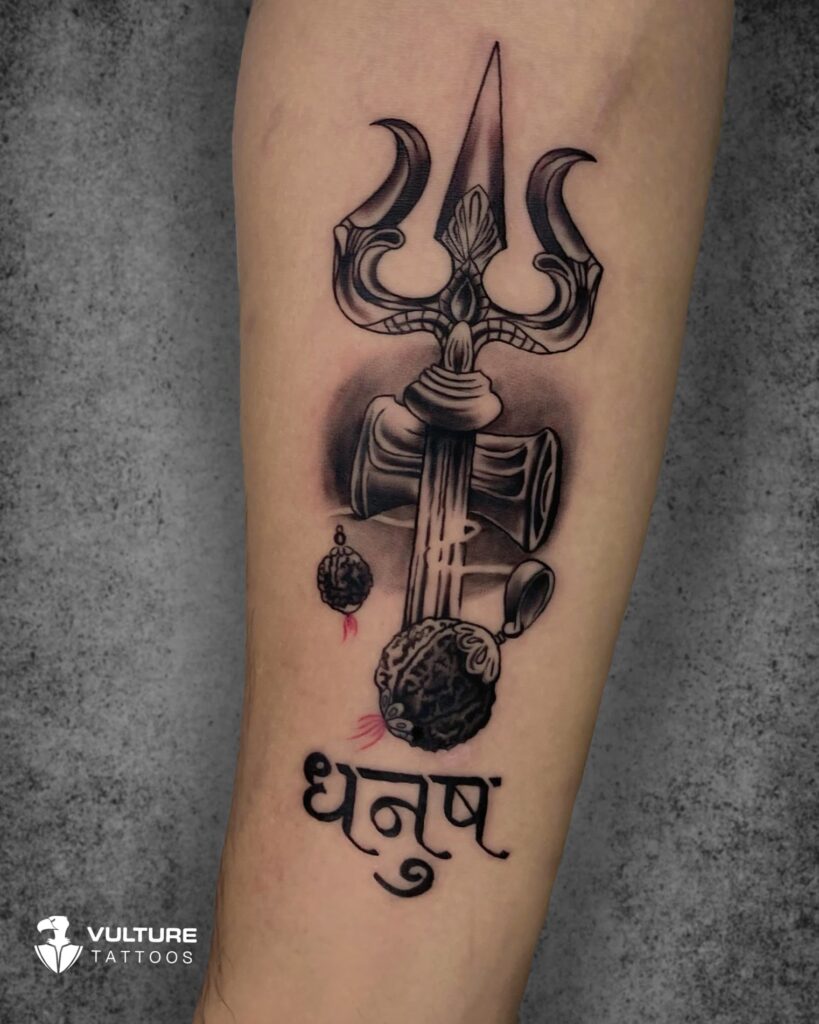
The trishul is the most quietly powerful symbol most people can get tattooed, and it is also one of the few that works at almost any size. A three-inch trishul on a wrist reads clearly. A full forearm trishul with a damru and a coiled serpent reads clearly. Very few symbols scale like that, and it is the reason this design has stayed popular across generations while trends came and went.
But scale is exactly where people get careless. A trishul is a weapon with a specific geometry — three prongs of particular proportion on a shaft — and when the proportions drift, it stops reading as Shiva’s trident and starts reading as a garden fork. If you are looking at trishul tattoo designs, this guide covers what it means, which combinations work, and how to build one that still looks right in twenty years. We are Vulture Tattoos, an appointment-only studio in Sector 47, Gurgaon.
What the trishul means
The trishul is the weapon of Shiva, and almost everything about it comes in threes — which is the whole point of the symbol.
- Creation, preservation, destruction. The three fundamental processes, held in one hand. The trishul is not a symbol of violence; it is a symbol of the complete cycle.
- Past, present and future. Time itself, and the idea of standing outside it.
- The three gunas — sattva, rajas and tamas. Balance, activity and inertia. The qualities every mind moves between.
- The three states — waking, dreaming, deep sleep. The same trio the Om maps out, which is why the two symbols pair so naturally.
- Destroying the three afflictions — physical, mental and spiritual suffering. This is the reading most people who wear it mean.
That last one is worth pausing on, because it is why the trishul is so often chosen after something difficult. It is not a boast. It is closer to a statement about what you have decided to cut through.
Trishul tattoo designs that work
- Simple trishul. Clean linework, correct proportion, nothing else. Timeless, and it works at small sizes where more complex devotional pieces cannot.
- Trishul with damru. The two-headed drum wrapped at the shaft with its cord. The most classic pairing and instantly recognisable. The damru represents the sound of creation, so the two together carry the full cycle.
- Trishul with Om. The shaft running through or beside ॐ. Our most requested devotional combination — see our Om tattoo designs guide for how the Om itself should be formed.
- Trishul with serpent. Vasuki coiled around the shaft. Adds movement and fills a vertical space beautifully, and it is one of the strongest options for a forearm.
- Trishul with third eye. The eye set into or above the shaft, often with flame. Dramatic, and it needs black and grey shading to work properly.
- Trishul with Mahadev face. A realistic Shiva portrait with the trident behind or beside it. Ajay’s territory, and one of the most powerful pieces we do — usually needs a forearm, upper arm or back.
- Trishul armband. The trident worked into a band pattern with damru and rudraksha. See our armband tattoo designs guide for how bands are planned.
- Trishul with rudraksha and mantra. Beads along the shaft, Devanagari text alongside. Read our script tattoo guide before committing to any text.
- Geometric or mandala trishul. The trident inside ornamental geometry or dotwork. Modern, and it suits people who want the symbol without heavy realism.
Getting the proportions right
This is where trishuls go wrong, and it is almost always the same three mistakes.
- Prong length and spread. The centre prong is longer than the outer two, and the outer two curve outward at a specific angle before turning up. Too short, too straight, or spread too wide and it stops reading as a trishul.
- Shaft thickness relative to the head. A shaft too thin looks fragile; too thick looks blunt. The relationship is what gives the symbol its weight.
- The joining detail. Where the prongs meet the shaft there is usually a collar or binding. Skipping it makes the head look like it is floating, and this is the single most common giveaway of a design drawn by someone unfamiliar with the symbol.
A trishul is a symbol most people in Gurgaon recognise instantly. That familiarity cuts both ways — it means a well-drawn one carries real weight, and a badly proportioned one is obvious to everyone who looks at it.
Where a trishul sits best
The trishul is a strongly vertical symbol, so it wants a vertical surface. That narrows the good placements considerably.
- Inner forearm. The best placement in most cases. Naturally vertical, flat, visible, low friction, ages well.
- Outer forearm. Same advantages, more visible to others, slightly more sun exposure.
- Spine. Excellent for a long trishul, especially with a mantra running alongside. Flat, protected from sun, and the symmetry suits it. Tender to sit.
- Upper arm and shoulder. Comfortable, easy to cover, good for a trishul with a Mahadev face.
- Calf. Naturally vertical and roomy — though see the placement note below.
- Chest and sternum. Powerful placement, sharper to sit, good for symmetrical compositions.
The respect question. Many Hindus hold that sacred symbols should not be worn below the waist — which rules out calf, ankle and foot placements for a lot of people. Views genuinely differ and it is your body and your decision. We raise it at the consultation rather than let you hear it afterwards from a relative, because placement is the most common source of regret we see with devotional work, far more than design.
Size and how it ages
The trishul ages better than most devotional designs, and the reason is structural: it is made of long, clean strokes with generous space between them. There are no tight enclosed gaps of the kind that close up as pigment settles.
That advantage disappears if you make it very small or very fine. Two things to hold on to:
- Keep the prong gaps open. The space between the three prongs is what makes the shape readable. Cramped, and it closes into a blob over the years.
- Confident stroke weight beats hairline. A slightly heavier trishul will still read clearly when a delicate one has softened.
If you are adding a damru cord, a serpent or rudraksha beads, those details need real size to survive — the fine wrapping of a cord is the first thing to blur on an undersized piece.
Black and grey or colour?
Most trishul work here is black and grey, and that is usually the right call. The symbol is graphic, the meaning is austere, and black holds contrast on every skin tone without the pigment-versus-undertone question that colour raises on medium and deeper Indian skin. It is also the most durable option in Gurgaon’s sun. Our black and grey tattoo guide explains why.
Colour works beautifully on the fuller devotional compositions — blues for Shiva’s throat and skin, orange in flame, red in a third eye. If that is the direction, our colour tattoo guide for Gurgaon covers how pigment behaves on Indian skin.
Does it hurt?
The same as any tattoo of that size in that place. Outer forearm, upper arm and thigh are the most comfortable. Spine, sternum, ribs and the inner arm are sharper. A simple trishul is usually a short session. A full composition with a Mahadev face, serpent and shading is a long one, and may be split across sittings.
Ready to talk through your idea? Call or WhatsApp us on +91 96676 14250 or message us on WhatsApp and we will plan it with you.
Healing and aftercare, with a Gurgaon twist
- Keep the initial wrap on for as long as your artist advises, then wash gently with lukewarm water and a mild fragrance-free soap.
- Pat dry, never rub. Rubbing fresh linework pulls pigment from thin strokes.
- Apply a thin layer of the recommended balm. Thin is the word.
- Do not pick or scratch. A gap in a long clean stroke is very visible.
- No swimming, saunas, gym sweat or soaking for the first two to three weeks.
- Keep it moisturised well past the peeling stage.
Forearm placements take daily Gurgaon sun if you drive, ride or walk between buildings. UV softens black over years, and on a trishul that shows up as edges going fuzzy rather than the design fading. Once healed, use SPF 30 minimum — 50 is better — every time it is exposed. Our full tattoo aftercare guide for Gurgaon covers every stage.
Why the artist matters here
A trishul is mostly long straight and curved lines, which sounds easy and is not. A long line has nowhere to hide a wobble. Stroke weight has to stay perfectly consistent from the base of the shaft to the tip of the centre prong, the two outer prongs have to mirror each other exactly, and the whole thing has to sit straight on a curved limb — which means the stencil has to be checked with the arm in more than one position.
Ajay handles our realism, devotional, portrait and cover-up work, so trishuls with Mahadev faces, third eyes, serpents and heavy shading are his. Ronny specialises in fine-line, botanical, script and geometric work, which covers clean minimal trishuls, ornamental versions and Devanagari mantras. Our page on the tattoo artists in Gurgaon introduces both.
Every tattoo is done with single-use sterile needles opened in front of you, in an appointment-only studio, which is part of why our clients have left more than 270 five-star Google reviews.
Custom design, made for you
- Consultation. You bring the idea and any references. We talk about what the piece means to you, what elements belong in it, and how big it needs to be.
- Design. Drawn to your placement, with proportions checked and gaps sized to survive the decades. You see it before any needle touches you.
- Stencil check in motion. Arm relaxed and raised, so a long vertical piece sits straight in every position.
- A written quote at consultation. Clear, before anything begins. Our tattoo cost guide for Gurgaon explains what shapes it.
- Aftercare and touch-ups. A clear plan, and we are on WhatsApp while it heals.
The local angle: why book in Sector 47
Vulture Tattoos sits at Shop F-04, Spaze Boulevard, Malibu Towne, Sector 47, Gurugram, easy to reach from across Gurgaon, DLF, Sohna Road, Golf Course Road and South Delhi. Appointment-only means the studio is calm and private — which most people getting devotional work genuinely prefer — and it means your design gets proper drawing time instead of being fitted around walk-ins.
Book your trishul tattoo: call or WhatsApp +91 96676 14250 to start with a consultation.
See our work and get in touch
Line consistency is the whole test on a symbol like this, and it has to be seen, so browse our recent pieces on Instagram at @vulture_tattooz, read more about the studio at Vulture Tattoos, or reach out through our contact page. When you are ready, call or WhatsApp us on +91 96676 14250 and we will plan trishul tattoo designs drawn properly and built to last.
Frequently Asked Questions
What does a trishul tattoo mean?
It is Shiva’s trident, and its meaning comes in threes: creation, preservation and destruction; past, present and future; the three gunas of sattva, rajas and tamas; and the destruction of the three afflictions — physical, mental and spiritual suffering. That last reading is what most people who wear it mean. It is a symbol about cutting through, not about aggression.
What goes well with a trishul?
The damru is the most classic pairing, usually wrapped at the shaft with its cord. Om, the third eye, a coiled serpent, rudraksha beads and a Mahadev face all combine naturally, and Devanagari mantras sit well alongside. These work as one composition rather than as separate tattoos placed near each other, which is a design decision worth making at the consultation.
Can a trishul tattoo be small?
Yes — it is one of the few devotional symbols that reads clearly at small size, because it is made of long clean strokes with open gaps rather than fine enclosed detail. Keep the space between the three prongs generous and the stroke weight confident rather than hairline. Added details like a damru cord or beads are what need real size to survive.
Where should a trishul tattoo not be placed?
Many Hindus hold that sacred symbols should not be worn below the waist, which rules out calf, ankle and foot placements for a lot of people. Views differ genuinely, and it is your decision. We raise it at the consultation because placement, not design, is the most common source of regret we see with devotional tattoos.
Should a trishul be black and grey or colour?
Black and grey suits it best in most cases — the symbol is graphic, black holds contrast on every skin tone without the pigment-versus-undertone issue colour raises on deeper Indian skin, and it is the most durable choice in Gurgaon’s sun. Colour comes into its own on fuller devotional compositions, where blues, flame orange and a red third eye add real depth.
Do trishul tattoos age well?
Better than most devotional designs, because the shape is built from long strokes with open space rather than tight enclosed detail. The two things that undermine it are going too small and going too fine — cramped prong gaps close up as pigment settles over the years. Size it honestly and protect it from sun and it will read clearly for decades.
Can you add a trishul to a tattoo I already have?
Often yes, if there is space that suits a vertical element and the existing piece’s style can absorb it. It works best when the addition is designed as part of the whole rather than squeezed into a gap. Bring in a photo or come by for a consultation and we will tell you honestly whether it will sit well or look added on.
How do I book and how much will it cost?
Booking is by appointment. Call or WhatsApp us on +91 96676 14250 to arrange a consultation, where we discuss the design, elements, size and placement, and give you a clear written quote once the details are settled. Pricing depends on size, detail and time, so we quote in person rather than online.