Om Tattoo Designs: Meaning, Correct Form, Placement & Respect
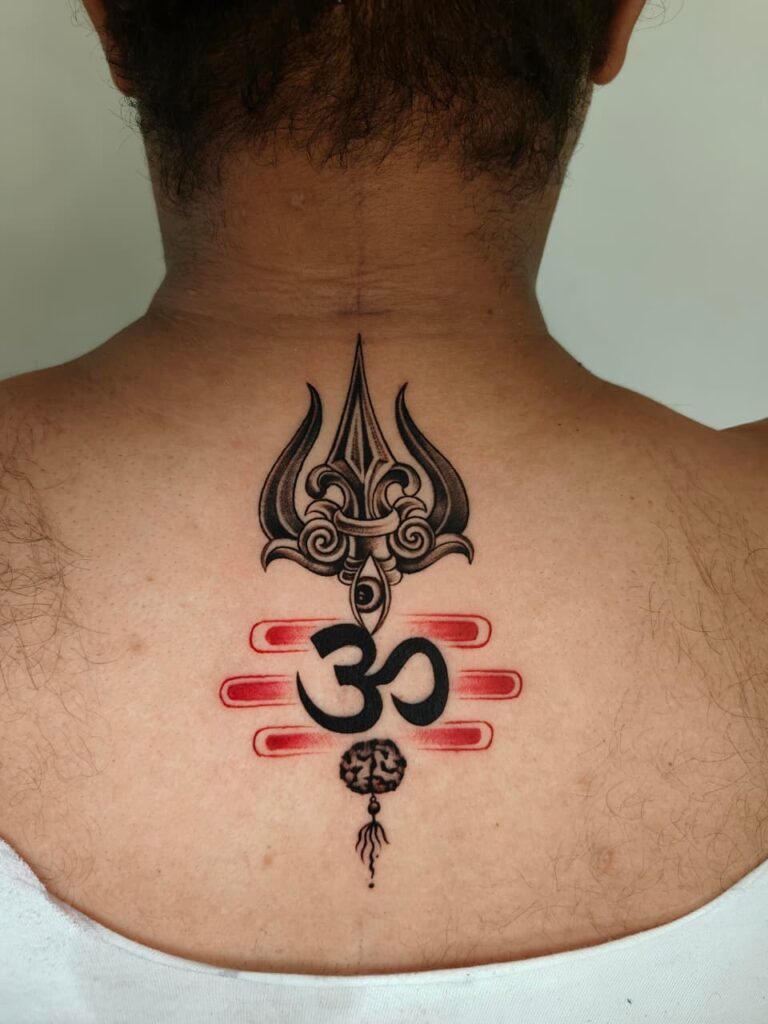
The Om is probably the most tattooed symbol in India, and one of the most frequently drawn wrong. Not wrong in an obvious way — wrong in the way that a native reader notices instantly and everyone else does not: a curve that closes when it should open, a dot placed where it changes the character, a crescent that has drifted into a decorative flourish instead of the mark it actually is.
That matters because ॐ is not a logo. It is a written character with a specific correct form, and it carries meaning in every part of its shape. If you are looking at om tattoo designs, this guide covers what the symbol actually says, how to keep the form correct, where it should and should not go, and how it ages on skin. We are Vulture Tattoos, an appointment-only studio in Sector 47, Gurgaon, and devotional work is one of the things we are most careful with.
What the Om actually means
Om, or Aum, is described in the Mandukya Upanishad as the sound containing all of existence. The written symbol maps onto that idea, and each part of it means something specific:
- The large lower curve — the waking state, ordinary conscious life.
- The upper curve — the deep sleep state, the unconscious.
- The middle curve, extending outward — the dream state, between the two.
- The crescent, or chandrabindu — maya, illusion. The veil that separates ordinary awareness from the fourth state.
- The dot above the crescent — turiya, the fourth state. Absolute consciousness, beyond the other three, which is why it sits apart from everything else and touches nothing.
This is worth knowing for a practical reason as well as a spiritual one. Once you understand that the dot is meant to be separate, you understand why a design that merges the dot into the crescent, or drops it entirely for a cleaner look, is not a stylistic choice — it has removed a meaning. The same goes for the crescent, which some minimal designs leave out entirely.
Om tattoo designs that work
- Classic single Om. The symbol alone, clean and correctly formed. Understated and the most common choice. Deceptively hard to execute well, because with nothing else on the skin every irregularity in the curve is visible.
- Om with trishul. The most requested combination in India. The trishul’s shaft often runs through or beside the Om, and the two carry related meaning. Our devotional tattoo guide for Gurgaon covers the wider family of these designs.
- Om with Mahadev. The symbol paired with a Shiva face, a meditating figure, or the third eye. Usually black and grey realism, and one of Ajay’s most requested pieces.
- Om inside a mandala. The symbol at the centre of ornamental geometry. Beautiful, meditative, and it gives the Om a frame that suits it. See our mandala tattoo guide.
- Om with damru and rudraksha. The drum, the beads, the trishul — a devotional cluster that reads as one piece.
- Om with lotus. Softer, often chosen by people who want the symbol without the heavier Shaivite imagery.
- Om Namah Shivaya in script. The mantra written in Devanagari, sometimes wrapped as a band, sometimes alongside the symbol. Read our script tattoo guide before committing to text.
- Om with the sound waveform. The chanted sound rendered as an audio waveform beside the symbol. Modern, and surprisingly effective.
- 3D and dimensional Om. Shading that lifts the symbol off the skin. Impressive when done well, and it needs real size and a skilled hand to avoid looking flat.
Getting the form right
This is the section most pages skip entirely, and it is the reason people end up with an Om they quietly dislike.
- The dot stays separate. It should sit above the crescent, clearly detached. Merging them or losing the gap changes the character.
- The crescent is not a flourish. It has a defined shape and position. Designers who have not read the script sometimes stylise it into a swoosh.
- Proportion between the curves matters. The lower curve is the largest; the relationship between the three is what makes the symbol read as ॐ rather than as a shape that resembles it.
- Beware of “aesthetic” versions from image searches. A lot of what circulates online is decorative artwork drawn by people who cannot read Devanagari. It looks fine to an untrained eye and wrong to everyone else.
- Have it checked before it becomes a stencil. Someone who actually reads the script should confirm the form. This takes five minutes and prevents a permanent mistake.
We would far rather redraw a design than tattoo a version of the symbol you will be corrected on at a family function.
Placement — and the respect question
This one is specific to India and genuinely matters to most people who get this tattoo, so it deserves a straight answer rather than being avoided.
Many Hindus hold that sacred symbols should not be worn below the waist, and particularly not on the feet, calves or anywhere associated with the lower body. The reasoning comes from the same custom that has people apologise when a book or a foot touches something sacred. There is no single ruling that everyone agrees on, and plenty of people take a different view. But it is a widely held belief, and it is the most common reason someone regrets a placement rather than a design.
Our position is simple: it is your body and your call, and we will tattoo what you decide. But we will raise it at the consultation rather than let you find out afterwards from a relative.
Placements that work well:
- Inner forearm. Flat, visible, low friction, ages well, and easy to keep out of the sun. The most popular choice.
- Upper arm and shoulder. Naturally covered, comfortable to sit, good curve for a symbol with a defined orientation.
- Back of the neck / nape. Classic for a single small Om. Easily covered by hair.
- Upper back and between the shoulder blades. Flat, protected, and gives a mandala or larger composition proper room.
- Chest. Meaningful placement over the heart, with space for the symbol to be sized properly.
- Inner wrist. Popular and personal, but the highest-friction option here. Keep it simple and not too fine.
Size, and how the Om ages
The Om has one built-in vulnerability: the gap between the dot and the crescent. Ink spreads slightly in skin over years, and small tight gaps are the first thing to close. On a very small Om, that gap can disappear within a decade, and once the dot merges into the crescent the symbol has lost a piece of its meaning.
- Do not go tiny. A two-centimetre Om looks perfect on day one and blurs into a dark squiggle far sooner than you would like.
- Keep the strokes confident, not hairline. Very fine linework is the version that softens fastest.
- Leave the gaps generous. Especially around the dot. That space is what buys the design decades.
- Bold reads longer. A slightly heavier stroke weight will still be a clear Om when a hairline version has gone soft.
Does it hurt?
Same as any tattoo of that size in that place — the symbol itself changes nothing. Fleshier areas like the outer forearm, upper arm and thigh are the most comfortable. Bonier, thinner-skinned areas like the ribs, sternum, spine, collarbone and inner wrist are sharper. A single Om is usually a short session; a full devotional composition with Mahadev or a mandala is longer and may be split across sittings.
Ready to talk through your idea? Call or WhatsApp us on +91 96676 14250 or message us on WhatsApp and we will help you plan it properly.
Healing and aftercare, with a Gurgaon twist
- Keep the initial wrap on for as long as your artist advises, then wash gently with lukewarm water and a mild fragrance-free soap.
- Pat dry, never rub. Rubbing fresh linework pulls pigment out of thin strokes.
- Apply a thin layer of the recommended balm. Thin is the word.
- Do not pick or scratch. A picked scab on a symbol this recognisable leaves a gap you will notice every day.
- No swimming, saunas, gym sweat or soaking for the first two to three weeks.
- Keep it moisturised well past the peeling stage.
The local part: forearm and wrist placements catch Gurgaon sun every day, and UV softens black over years. On a symbol with defined gaps, that softening shows up as the shapes closing rather than as fading. Once healed, use SPF 30 minimum — 50 is better — every time it is exposed. Our full tattoo aftercare guide for Gurgaon covers each stage.
Why the artist matters here
A symbol everyone recognises is unforgiving. On a floral piece, a slightly uneven curve is invisible. On an Om, every person who sees it knows what it is supposed to look like, so any wobble in the stroke or drift in the proportion registers immediately — even to people who could not explain why it looks off.
A skilled artist keeps stroke weight consistent through the curves, holds the proportions between the three arcs correct, places the dot with the right separation, and sizes the piece so those relationships survive. They also know when to say a reference image is a decorative approximation rather than the actual character.
Ajay handles our realism, devotional and portrait work, so Om paired with Mahadev, the third eye or realistic elements sits with him. Ronny specialises in fine-line, botanical, script and geometric work, which covers clean single Oms, mandala compositions and Devanagari mantras. Our page on the tattoo artists in Gurgaon introduces both.
Every tattoo is done with single-use sterile needles opened in front of you, in an appointment-only studio, which is part of why our clients have left more than 270 five-star Google reviews.
Custom design, made for your skin
- Consultation. You bring the idea and any references. We talk about form, size, placement, and whether the Om stands alone or sits in a larger composition.
- Form check. We confirm the character is correct before it becomes a stencil, not after.
- Design. Drawn for your placement and sized so the gaps survive the decades. You see it before any needle touches you.
- A written quote at consultation. Clear, before anything begins. Our tattoo cost guide for Gurgaon explains what shapes it.
- Aftercare and touch-ups. A clear plan, and we are on WhatsApp while it heals.
The local angle: why book in Sector 47
Vulture Tattoos sits at Shop F-04, Spaze Boulevard, Malibu Towne, Sector 47, Gurugram, easy to reach from across Gurgaon, DLF, Sohna Road, Golf Course Road and South Delhi. Appointment-only means the studio is quiet and private, which most people getting devotional work actually want. It also means the design gets proper time rather than being rushed between walk-ins.
Book your Om tattoo: call or WhatsApp +91 96676 14250 to start with a consultation.
See our work and get in touch
Line quality and correct form are the whole thing here, and both have to be seen, so browse our recent pieces on Instagram at @vulture_tattooz, read more about the studio at Vulture Tattoos, or reach out through our contact page. When you are ready, call or WhatsApp us on +91 96676 14250 and we will plan om tattoo designs drawn correctly and built to last.
Frequently Asked Questions
What does each part of the Om symbol mean?
The large lower curve is the waking state, the upper curve is deep sleep, and the middle curve extending outward is the dream state. The crescent above them is maya, illusion. The dot above the crescent is turiya, the fourth state of absolute consciousness — which is why it sits separate and touches nothing. Knowing this is also practical: it explains why a design that merges or drops the dot has removed a meaning, not simplified a shape.
Is it disrespectful to get an Om tattoo?
Most people, including most practising Hindus, treat a devotional tattoo as an expression of faith rather than a violation of it. The concern that does come up commonly is placement, not the tattoo itself — many hold that sacred symbols should not be worn below the waist, particularly on the feet or calves. Views differ and it is your decision, but we will raise it at the consultation so it is a choice rather than a surprise.
Where should an Om tattoo not be placed?
By the belief many Hindus hold, not below the waist — feet, calves and the lower body. There is no single agreed ruling and plenty of people take a different view, but this is the most common source of regret we hear about, and it is about placement rather than design. Inner forearm, upper arm, nape, upper back and chest are the placements that avoid the question entirely.
How small can an Om tattoo be?
Bigger than most people first want. The symbol has a small gap between the dot and the crescent, and as ink naturally spreads over the years, small tight gaps close first. On a very small Om that gap can vanish within a decade and the character loses part of its meaning. We will give you the honest minimum size at the consultation.
Can you combine Om with a trishul or Mahadev?
Yes, and it is our most requested devotional combination. Om with trishul, Om with a Shiva face, Om with the third eye, damru and rudraksha all work as single compositions rather than as separate tattoos placed near each other. Ajay handles the realistic and portrait elements; Ronny handles the linework and ornamental framing.
How do I make sure the Om is drawn correctly?
Have the form confirmed by someone who actually reads Devanagari before it becomes a stencil. A great deal of the Om artwork circulating online is decorative work by designers who cannot read the script — the proportions drift, the crescent becomes a flourish, the dot merges. It looks fine to an untrained eye and wrong to everyone else. We check this as standard.
Does an Om tattoo age well?
Yes, if it is sized honestly and the strokes are confident rather than hairline. The failure mode is always the same: too small, too fine, gaps too tight, so the shapes close up as pigment settles. A slightly bolder, slightly larger Om will still read clearly in twenty years when a delicate one has softened into a dark squiggle. Sun protection matters too, especially on forearms.
How do I book and how much will it cost?
Booking is by appointment. Call or WhatsApp us on +91 96676 14250 to arrange a consultation, where we discuss the design, size and placement, and give you a clear written quote once the details are settled. Pricing depends on size, detail and time, so we quote in person rather than online.