Small Tattoo Designs for Girls: Ideas, Placement & What Actually Lasts
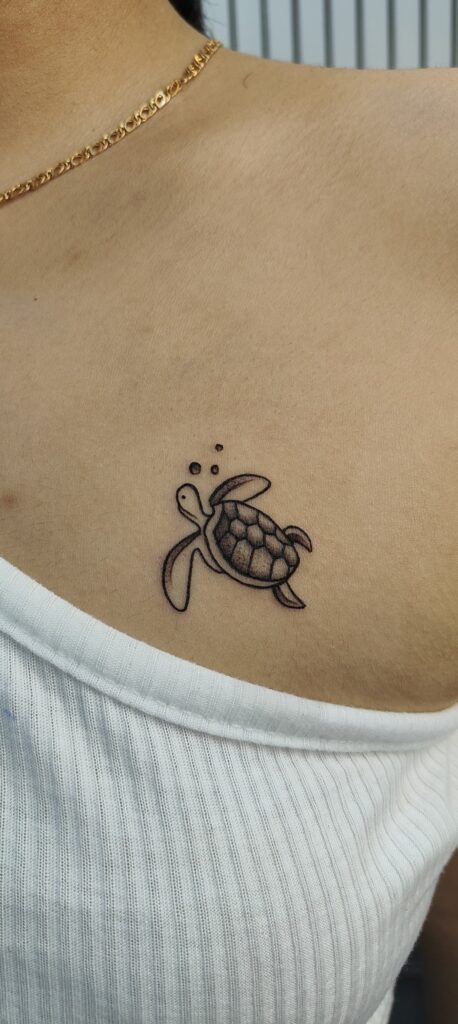
Small tattoos get sold as the easy option. Low commitment, quick session, easy to hide, nothing to overthink. Most of that is true. But there is one thing nobody mentions at the counter, and it is the single most useful thing to know before you book: small is the hardest size to make last.
Everything that goes wrong with a tattoo over the years — lines softening, gaps closing, detail merging — happens at a fixed scale, roughly the same fraction of a millimetre regardless of how big your tattoo is. On a large piece that is invisible. On a two-centimetre design it is the difference between a delicate bloom and a dark smudge. If you are looking at small tattoo designs for girls, this guide covers ideas that genuinely work at small scale, where to put them, and how to choose one you will still love at forty. We are Vulture Tattoos, an appointment-only studio in Sector 47, Gurgaon.
Design ideas that work small
The rule is simple: fewer elements, cleaner shapes, more space between the lines. Designs built that way stay beautiful. Designs that cram detail into a small footprint do not.
- Single florals. One rose, lotus, sunflower, daisy or wildflower stem. Our rose tattoo designs guide covers the most requested of these in detail.
- Butterflies. Consistently the most requested small design, and it works because the shape is recognisable even when simplified. See our butterfly tattoo designs guide.
- Moon phases. A crescent alone, or a small row of phases along the forearm or spine. Clean shapes, generous gaps, ages beautifully.
- Small script. A word, a name, a date, a short phrase. Keep it short and legible — our script tattoo guide explains why length is the enemy here.
- Feathers and single birds. Light, simple silhouettes — see our feather tattoo designs guide.
- Symbols with meaning. Om, a small trishul, an unalome, a semicolon, a tiny mandala. Our Om tattoo designs guide covers what to check on devotional symbols.
- Line-art faces or hands. Single continuous-line drawings. Modern, elegant, and they need a steady hand more than they need size.
- Tiny animals. A cat, an elephant, a hummingbird, a paw print. Silhouettes hold up far better than detailed miniature portraits.
- Constellations and stars. Your birth constellation as small dots joined by fine lines. Beautiful — with one caveat covered below.
- Matching pieces. Sister, best friend or couple tattoos that only complete when the two are side by side.
The honest truth about small tattoos
This is the part that will actually save you money and regret.
Detail does not scale down. A design that looks stunning as a 15 cm illustration on your phone will not simply become a smaller version of itself at 3 cm. It will become a version with the detail removed — and if the artist does not remove it deliberately at the drawing stage, time will remove it for you, unevenly, over five years.
What survives at small size: bold-ish clean lines, simple recognisable shapes, generous gaps between elements, and solid areas rather than fine shading.
What does not survive: hairline strokes, tiny lettering, dense shading in a small area, and any design where two lines sit very close together. Micro-realism — a miniature photo-realistic portrait — looks incredible fresh and is the least durable option on the menu.
Constellations specifically: tiny dots with fine connecting lines are one of the most-requested small designs, and one of the most likely to blur. Dots spread just like lines do, and a very small dot with a very fine line into it will merge. Slightly bigger dots and slightly more space between them will still be a constellation in fifteen years.
None of this means avoid small tattoos. It means choose a design built for the size rather than shrinking one that was not.
Best placements — with honest notes
- Inner forearm. The best small-tattoo placement, genuinely. Flat, low friction, easy to see, ages well, easy to keep out of sun.
- Upper arm and outer shoulder. Comfortable to sit, naturally covered by a sleeve, low friction.
- Collarbone. Elegant and popular. The bone gives a natural line to follow. Slightly sharper to sit.
- Behind the ear. Discreet and easy to hide under hair. Small area, so keep the design very simple.
- Ankle. Classic, understated. Bony, so expect it to be sharper, and shoes rubbing during healing is a real consideration.
- Spine and back of neck. Flat, protected from sun, and vertical designs like moon phases or short script sit beautifully.
- Wrist. Extremely popular and worth thinking about twice. It is one of the highest-friction, highest-sun spots on the body — you wash your hands there, your watch sits there, and it is exposed all day. Wrist pieces need to be simple and not too fine, and they are more likely to want a touch-up eventually. Our wrist tattoo guide covers this properly.
- Fingers. We will be straight with you: finger tattoos fade fastest of anywhere on the body, often visibly within a year. Many people accept them as designs needing regular touch-ups rather than permanent pieces. If you want one, go in knowing that. Our hand and finger tattoo guide explains why.
If it is your first tattoo
Most small pieces are somebody’s first, and there is very little to be nervous about.
The sensation is usually described as a persistent scratch rather than a sharp pain. A small piece is a short session — often thirty to ninety minutes including setup. Fleshier spots like the outer forearm, upper arm and thigh are the most comfortable; ribs, ankles, collarbone and the inside of the wrist are sharper.
Practical things that genuinely help: eat a proper meal beforehand, sleep well the night before, skip alcohol for twenty-four hours, wear clothing that gives easy access to the spot, and bring water. Our full first tattoo guide for Gurgaon walks through the whole day.
One more thing, said plainly because it matters: you can change your mind at any point, including after the stencil is on. Nobody here will make that awkward for you. A stencil you are not certain about is a stencil we redraw.
Healing and aftercare, with a Gurgaon twist
- Keep the initial wrap on for as long as your artist advises, then wash gently with lukewarm water and a mild fragrance-free soap.
- Pat dry, never rub. Rubbing fresh linework pulls pigment from thin strokes — and on a small piece, thin strokes are most of the tattoo.
- Apply a thin layer of the recommended balm. Thin is the word.
- Do not pick or scratch. On a small design, one lost patch is a large fraction of the whole thing.
- No swimming, saunas, gym sweat or soaking for the first two to three weeks.
- Keep it moisturised well past the peeling stage.
The Gurgaon part matters more on small pieces than people expect. Wrist, forearm and ankle placements catch sun every day here, and UV softens fine lines faster than anything else. On a small design, that softening is the whole tattoo. Once healed, use SPF 30 minimum — 50 is better — every time it is exposed. Dust and sweat during the healing window are the other local hazard, so keep a fresh piece covered on a long commute. Our full tattoo aftercare guide for Gurgaon covers each stage.
Why the artist matters, even for something tiny
There is a common assumption that a small tattoo is a small job that anyone can do. The opposite is closer to true. On a large piece there is room to correct, blend and hide. On a two-centimetre design every single line is a large percentage of the tattoo, and there is nothing to hide behind.
A skilled artist knows how much detail your chosen size will actually hold, works at the right depth so fine lines stay crisp instead of blowing out, and will tell you honestly when a design needs to be a centimetre bigger to survive. An inexperienced one takes the booking, shrinks the reference and hands you something that looks perfect for eighteen months.
Ronny specialises in fine-line, botanical, script and geometric work, which is exactly the territory small designs live in. Ajay handles realism, devotional, portrait and cover-up work. Our page on the tattoo artists in Gurgaon introduces both, and our fine line tattoo guide explains how delicate work ages.
Every tattoo is done with single-use sterile needles opened in front of you, in an appointment-only studio, which is part of why our clients have left more than 270 five-star Google reviews.
Want to talk through an idea? Call or WhatsApp us on +91 96676 14250 or message us on WhatsApp — no obligation, and no pressure to book on the spot.
How it comes together with us
- Consultation. Bring your saved images. We talk about what you actually want it to mean, then work out the design and the honest minimum size.
- Design. Drawn custom, simplified where it needs to be so it survives, and fitted to your placement. You see it before any needle touches you.
- A written quote at consultation. Clear, before anything begins. Our tattoo cost guide for Gurgaon explains what shapes it.
- The session. Short, calm, at your pace, with breaks whenever you want them.
- Aftercare and touch-ups. A clear plan, and we are on WhatsApp while it heals.
The local angle: why book in Sector 47
Vulture Tattoos sits at Shop F-04, Spaze Boulevard, Malibu Towne, Sector 47, Gurugram, easy to reach from across Gurgaon, DLF, Sohna Road, Golf Course Road and South Delhi. Appointment-only means the studio is quiet and private — which matters a great deal if this is your first tattoo and you would rather not sit in a busy shop while you are nervous. One client at a time, no walk-in traffic, no audience.
Book your piece: call or WhatsApp +91 96676 14250 to start with a consultation.
See our work and get in touch
Fine linework has to be seen to be judged, so browse our recent pieces on Instagram at @vulture_tattooz, read more about the studio at Vulture Tattoos, or reach out through our contact page. When you are ready, call or WhatsApp us on +91 96676 14250 and we will help you plan small tattoo designs for girls that stay beautiful for decades.
Frequently Asked Questions
How small can a tattoo actually be?
It depends entirely on the design, not on a fixed number. A simple crescent moon or a clean silhouette works at two centimetres. A detailed floral or a miniature portrait needs several times that to survive, because fine detail closes up as ink settles over the years. We will give you the honest minimum for your specific design at the consultation rather than letting you find out at a touch-up.
Do small tattoos fade faster?
They do not fade faster, but fading is far more visible on them. Ink spreads by roughly the same tiny amount regardless of tattoo size, so on a large piece it is invisible and on a small one it can close the gaps that made the design readable. Choosing a design built for small scale — clean shapes, open spacing — is what solves this.
Which placement is best for a first small tattoo?
The inner forearm, for almost everyone. It is flat, comfortable to sit through, low friction, easy to keep out of the sun, and you can see it yourself. Upper arm and outer shoulder are close behind. Wrists and fingers are the most popular requests and the most demanding placements to keep looking sharp.
Does a small tattoo hurt?
Most people describe it as a persistent scratch rather than a sharp pain, and a small piece is a short session — often thirty to ninety minutes. Fleshier spots like the outer forearm and upper arm are the most comfortable; ribs, ankles, collarbone and inner wrist are sharper. You can ask for a break at any point.
Are finger tattoos a bad idea?
They fade fastest of anywhere on the body, often visibly within a year, because of constant friction, washing and sun. Plenty of people get them anyway and accept regular touch-ups as part of the deal. We will not talk you out of it — we will just make sure you know before you sit down rather than after.
Can I get a constellation or star map tattoo?
Yes, and they are lovely. The one thing to plan for is that very small dots with very fine connecting lines can merge as ink settles. Slightly larger dots with slightly more space between them will still read as your constellation in fifteen years, whereas the tiniest version may not. We size it accordingly.
Will a small tattoo be easy to remove or cover later?
Easier than a large one, yes, on both counts. A small piece is well within the range of a straightforward cover-up, and laser removal needs fewer sessions on a small area than a big one. That said, choosing carefully now is still far cheaper than either. Our cover-up guide covers the options.
How do I book and how much will it cost?
Booking is by appointment. Call or WhatsApp us on +91 96676 14250 to arrange a consultation, where we discuss the design, size and placement, and give you a clear written quote once the details are settled. Pricing depends on size, detail and time, so we quote in person rather than online.