Rose Tattoo Designs & Meaning: A Complete Guide
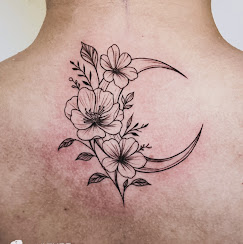
The rose is probably the most tattooed flower on the planet, and there’s a good reason it keeps coming back. It carries a lot of meaning in a shape that reads clearly on skin. It suits almost every body part. And it can be soft or hard, delicate or heavy, depending on how you draw it. I’ve inked hundreds of them, and no two clients have ever wanted quite the same thing.
This guide walks through what a rose actually means, how colour changes that meaning, the main styles you can choose from, where they sit best on the body, and the combinations people ask for again and again. I’ll also be honest about how roses age over the years, because that part rarely gets talked about and it matters more than the design you pick on day one.
What a rose tattoo actually means
Most people know the rose stands for love. That’s true, but it’s only the surface. The flower has been a symbol for thousands of years, and it carries a whole range of ideas at once.
The reason the rose works so well as a tattoo is the built-in contrast. You have the bloom, which is beauty, softness, and openness. And you have the thorns, which are pain, defence, and the price of getting close. A rose says you can hold both. Love and loss. Something beautiful that can still hurt you, or something that grew despite the damage. That tension is why people get roses to mark a person, a passing, a hard chapter they came through, or a version of themselves they’re proud of.
Here’s the range of ideas a single rose can hold:
- Love and passion: the oldest and most common reading, romantic or otherwise.
- Loss and remembrance: a rose for someone who’s gone, often with a name or a date.
- Beauty with a warning: the thorns say the softness is guarded.
- Balance: good and bad, joy and grief, held in one image.
- Growth: something that bloomed out of hard ground.
A rose doesn’t force one meaning on you. It gives you a frame, and you fill it in. That’s part of why good rose tattoo designs feel personal even though the flower itself is so familiar.
Colour changes the meaning
Colour is not just a look. With roses, the colour you pick shifts what the tattoo says, and it’s worth knowing that before you commit. People have read meaning into rose colours for centuries, and a lot of that still holds.
Red roses
Red is the classic. It reads as love, passion, and life. It’s also the colour people choose to honour someone, so a red rose can be both a love tattoo and a memorial at the same time. If you want the most direct, universally understood version of a rose, red is it. Red does hold up reasonably well over time as far as colours go, but no colour beats black for longevity, which I’ll come back to.
Black roses
A black rose carries weight. It’s most often linked to death, grief, farewell, or the end of something. But it isn’t only a sad symbol. Plenty of people wear a black rose to mark strength through a dark stretch, or rebellion, or simply because they like the drama of it. Worth being clear here: a “black rose” done in solid black ink is a different thing from a rose done in black and grey shading. One is a mood, the other is a technique. Both age extremely well.
White roses
White reads as purity, new beginnings, and innocence. In older traditions it was also tied to the death of someone young. On skin, a true white rose is tricky, because white ink is the least reliable pigment we work with. It can fade to nothing or turn slightly yellow over time. Most artists build a “white” rose out of black and grey shading with the paper-white of your skin left open, rather than packing in white ink. That looks cleaner and lasts far longer.
Other colours
- Pink: gentleness, grace, admiration, gratitude — softer than red.
- Yellow: friendship, joy, warmth. Not usually romantic.
- Blue: the impossible or the unattainable, since a true blue rose doesn’t exist in nature.
- Purple: enchantment, mystery, sometimes royalty.
None of these colour meanings are rules. If you want a yellow rose because yellow is your mum’s favourite, that meaning beats any chart. But it helps to know what a colour signals to other people before you wear it for life.
The main rose tattoo styles
The same flower looks like a completely different tattoo depending on the style. This is where most of the decision-making actually happens, and it’s the part I spend the most time on with clients. Here are the styles worth knowing.
Realism
A realistic rose looks like a photograph of the flower — soft gradients, detailed petals, real depth. Done well, it’s stunning. It usually needs to be a decent size to hold all that detail, and it needs an artist who’s genuinely comfortable with realism, because a bad realistic rose looks muddy fast. Ajay at our studio does most of the heavy realism work, and roses are a regular request. Black and grey realism, in particular, ages beautifully.
Fine-line
Fine-line roses are thin, delicate, and modern. Light linework, minimal shading, a clean and quiet look. They suit smaller placements and people who want something subtle rather than bold. The honest catch is that very thin lines can soften and blur over the years, so fine-line work asks for a careful hand and realistic expectations. If this is your lean, our fine-line work is worth a look — Ronny handles most of that here.
Blackwork
Blackwork roses use solid black and strong negative space. Bold, graphic, high contrast. This is where a true “black rose” lives, and it’s about as durable as a tattoo gets, because solid black is the most stable ink over time. If you want something that will still read clearly in twenty years, blackwork is a smart choice.
Watercolour
Watercolour roses mimic paint on paper — soft washes, colour bleeds, splashes that spill past the outline. They feel loose and artistic and unlike anything traditional. The trade-off is longevity: those soft, low-saturation washes are the first thing to fade, so watercolour needs thoughtful design and honest aftercare. We build ours with enough structure underneath to hold up, and you can see the approach on our watercolour page.
Traditional
Traditional (American traditional) roses are the ones you picture on an old sailor’s arm — bold black outlines, simplified petals, flat strong colour, usually red and green. They’re built to last. The heavy outline and solid fill mean a traditional rose stays readable for decades, which is exactly why the style has survived as long as it has. If you care most about a tattoo that ages well, this is hard to beat.
Where a rose sits best on the body
Placement is half the design. The same rose looks right in one spot and cramped in another, and the shape of the flower actually lends itself to certain areas.
- Forearm: the workhorse spot. Flat, visible, easy to sit for, ages well. Great for a single medium rose or a small cluster.
- Upper arm and shoulder: the natural curve suits a rose beautifully, and there’s room to add leaves, stems, or a second element.
- Thigh: the best canvas for something large and detailed. Realism, neo-traditional, and watercolour all breathe here.
- Wrist and ankle: for small, fine-line, or minimalist roses. Delicate and easy to hide.
- Ribs and spine: a long-stemmed rose follows the body’s line well, though these spots are more tender to sit through.
- Hand and finger: striking, but fingers fade and blur fastest of anywhere. Go bold and simple or skip it.
One thing I tell everyone: think about how the stem flows before you fix the placement. A rose isn’t just the bloom. The stem and leaves decide how the whole piece moves along your arm or leg, and getting that direction right is what separates a thoughtful tattoo from a sticker slapped on.
Popular rose combinations
A lot of the best rose tattoo designs pair the flower with a second element, because that’s how you take a familiar symbol and make it say something specific. Here are the combos people ask for most, and what they tend to mean.
Rose and skull
The oldest and strongest pairing. A soft rose against a hard skull is life and death sitting side by side — beauty and mortality in one image. Visually it’s a gift, because the smooth petals contrast with the bone’s structure. It reads as “beauty is temporary,” or simply as a memento mori, a reminder that time runs out. It suits black and grey realism and traditional styles especially well.
Rose and clock
A rose with a clock or an hourglass is about time — love that lasts, a moment held, or the reminder that nothing does. People often set the clock to a meaningful hour: a birth, a passing, a wedding. The round face plays nicely against the petals, and Roman numerals add a bit of formality. It’s a busy combo, so it wants enough space to not turn into a blur.
Rose and name or date
The straightforward memorial or tribute. A rose with a name in script, or a date, marks a person directly. My one piece of advice: keep the lettering clean and give it room. Thin cramped script sitting inside tight petals is a classic ageing problem. Let the name breathe and it’ll stay legible.
Other pairings worth mentioning: a rose with a dagger (betrayal, or beauty defended), a rose with a snake (temptation, rebirth, the cycle of things), and a rose with a bird or butterfly (freedom, transformation). Each one bends the base meaning in a clear direction.
How roses age on skin — the honest part
This is the section most guides skip, and it’s the one I care about most. A tattoo isn’t a print. It sits in living skin and it changes. Knowing how helps you design something that still looks good in ten and twenty years.
- Black lasts, colour fades. Solid black and black-and-grey shading hold up longest. Bright colour softens, and the lightest colours go first.
- White ink is unreliable. It can vanish or yellow. Real “white” in a rose usually means leaving your skin open, not packing white pigment.
- Thin lines soften. Very fine linework spreads a little over years. Not a reason to avoid fine-line, just a reason to keep it well-spaced.
- Small and busy blurs. Tiny roses crammed with detail lose that detail as edges bleed together. Size gives detail room to survive.
- Sun is the enemy. UV fades every tattoo faster than anything else. Sunscreen once it’s healed is the single best thing you can do.
The takeaway is simple. If you want maximum longevity, lean toward black, keep it a sensible size, and don’t overcrowd it. If you want colour or fine detail, go in with open eyes and commit to aftercare. Neither choice is wrong — they’re just different, and a good artist will tell you the trade-off instead of selling you a fantasy.
Designing a rose that isn’t generic
The rose is one of the most common tattoos out there, so the real challenge is making yours feel like yours and not a flash sheet clone. A few things that actually help.
Start from meaning, not from a picture. If you can tell me why you want a rose — the person, the moment, the feeling — I can design around that. A rose for a grandmother who gardened wants different energy than a rose marking a hard year you survived.
Get specific about the flower’s state. A tight bud, a full open bloom, a rose just starting to wilt — each says something different. A wilting rose can be far more moving than a perfect one. Small choices like this carry more meaning than adding more elements.
Let a real artist draw it custom rather than picking something off the internet. Reference images are great for direction, but a tattoo copied straight from someone else’s arm rarely fits your body or reads as yours. This is exactly the kind of work we love — custom rose designs built around your story, not a template. Our studio in Sector 47, Gurgaon does bespoke rose work in realism, fine-line, blackwork, watercolour, and traditional, and every piece starts with a proper conversation before any needle touches skin.
When you’re ready to talk it through, reach us on +91 96676 14250 or message us on WhatsApp. We’re appointment-only and every setup uses single-use sterile needles, so you can plan a proper unhurried session. You can also start the conversation through our contact page.
See our work and get in touch
The best way to judge a studio is to look at healed work, not just fresh photos. Our portfolio and day-to-day pieces live on Instagram at @vulture_tattooz, where you can see how our roses actually settle into skin. You can read more about us and the team at Vulture Tattoos, and when you’ve got an idea forming, call or WhatsApp us on +91 96676 14250 to book. Ajay handles realism, devotional work, portraits and cover-ups, and Ronny handles fine-line, script and geometric — so whatever direction your rose takes, there’s a hand here suited to it. We’ve built up 270+ five-star Google reviews doing exactly this, one careful piece at a time.
Frequently Asked Questions
Do rose tattoos hurt more than other tattoos?
The rose itself doesn’t hurt more or less than anything else — pain comes from placement, not subject. A rose on the forearm or outer shoulder is fairly gentle. The same rose on the ribs, spine, or hand is a lot more intense because there’s less padding over the bone. Pick your spot with that in mind.
What does a black rose tattoo mean?
A black rose usually signals death, farewell, grief, or the end of something. It can also stand for strength through a dark time, rebellion, or simply a preference for bold graphic ink. Note that a solid black rose (a mood) is different from a rose done in black and grey shading (a technique) — both look great and both age extremely well.
Which rose tattoo style lasts the longest?
Traditional and blackwork last longest, because bold outlines and solid black are the most stable ink over time. Black and grey realism also holds up very well. Watercolour and very fine-line pieces are the most likely to soften, so they need careful design and good aftercare to stay sharp.
Should I get my rose in colour or black and grey?
Both work — it’s a trade-off. Black and grey lasts longer and has a timeless, dramatic look. Colour, especially red, is vivid and reads instantly but will soften sooner and needs more sun protection. If longevity is your priority, lean black and grey. If you love the pop of a red rose, go colour and commit to aftercare.
How big should a rose tattoo be?
It depends on the style. A detailed realistic rose needs room to hold its detail, so bigger is better — think forearm, upper arm, or thigh. A fine-line or minimalist rose can be small, on a wrist or ankle. Just avoid cramming lots of detail into a tiny space, because fine detail blurs as a tattoo ages.
What’s the best placement for a first rose tattoo?
The forearm is the friendliest first spot — flat, visible, not too painful, and it ages well. The outer upper arm and shoulder are also easy places to sit and give the flower a natural curve to follow. I’d steer a first-timer away from ribs, hands, and fingers.
Can you cover an old tattoo with a rose?
Often, yes. Roses are one of the best cover-up subjects because their layered petals and dark shading can hide a lot underneath. Whether it’ll work depends on the size, age, and darkness of the old piece — bring it in and we’ll tell you honestly what’s possible. Ajay does a lot of our cover-up work.
How do I make my rose tattoo unique?
Start from why you want it, not from a picture you found. Choose the flower’s state deliberately — a bud, a full bloom, or a wilting rose all say different things. Add one meaningful element rather than five. And have an artist draw it custom for your body instead of copying someone else’s. That’s what turns a common flower into your rose.