Conch Piercing in Gurgaon: Inner vs Outer, Pain, Healing and Jewellery
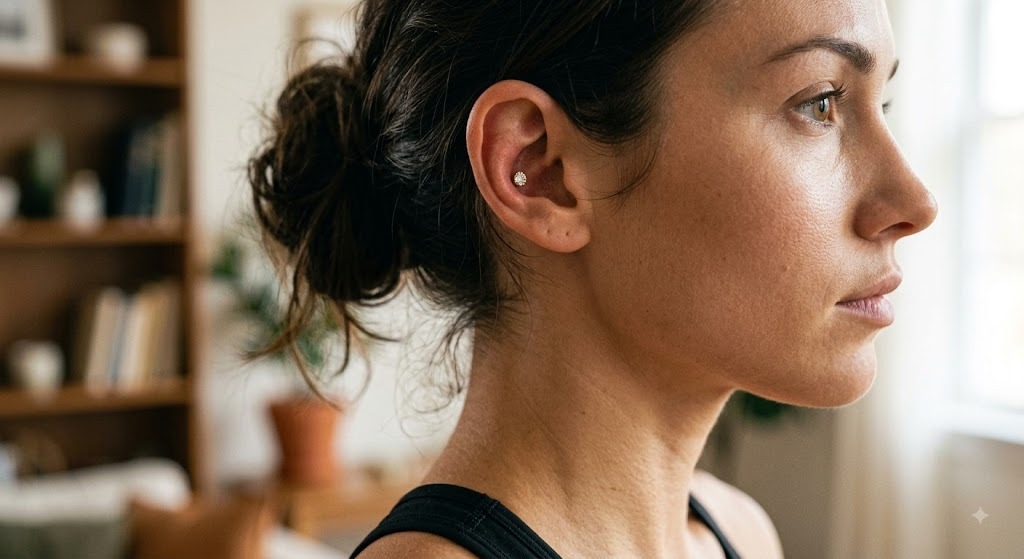
The conch is the large flat bowl of cartilage in the middle of your ear — named after the shell it resembles. It is one of the most versatile ear piercings there is, because it can be worn as a neat stud or, once healed, as a ring that hugs the outer edge of the ear.
It is also two different piercings that people constantly confuse with each other, and choosing the wrong one for the jewellery you actually want is a common and avoidable mistake.
If you are considering a conch piercing in gurgaon, this is the honest guide. We are Vulture Tattoos, an appointment-only studio in Sector 47.
Inner conch vs outer conch
This is the first decision, and it determines what jewellery you can wear.
Inner conch — through the deeper bowl, closer to the ear canal. Sits in the middle of the ear. Usually worn with a flat-back labret stud. This is what most people mean by “conch piercing”.
Outer conch — through the flatter area further out, towards the rim. This is the one that can take a large ring that wraps around the outer ear, which is the look a lot of people are actually after when they say conch.
Getting this right matters. If you want the big hoop, you need the outer conch — an inner conch will not sit correctly with that jewellery. Tell your piercer what jewellery you eventually want, not just where you want the hole, and let them place it accordingly.
Where it sits relative to your other piercings:
- Helix — the outer upper rim. See our helix piercing guide.
- Daith — the inner fold above the canal. See our daith piercing guide.
- Tragus — the flap in front of the canal. See our tragus piercing guide.
- Rook — the ridge above the daith.
Does it hurt?
Honest answer: a moderate to firm pressure, sharper than a lobe, over quickly.
The conch is thicker cartilage than the tragus or helix, so the needle takes a fraction longer to pass through, and people usually describe more of a firm push than a sharp sting. Most rate it in the middle of the ear-piercing range — more than a helix, less than a daith or industrial.
Because it sits in the middle of the ear rather than against the canal, you hear less of the crunch than with a tragus or daith. Many people find that alone makes it easier.
Our pain guide covers how placement affects sensation more generally.
Healing — 6 to 12 months
Cartilage, so slow. Treat this as the headline number rather than the optimistic one.
- Months 1–3: tender, some swelling, crusting around the jewellery. Normal.
- Months 3–6: comfortable most days, still healing internally. This is when people wrongly assume it is done.
- Months 6–12: fully settled.
Do not change the jewellery early. Changing a cartilage piercing before it has healed is the single most common cause of irritation bumps and a piercing that has to be abandoned. If you are getting a conch specifically for a big hoop, that hoop goes in after full healing — not at three months.
The practical problems nobody mentions
Sleeping. The conch sits in the middle of the ear, which means it presses directly into a pillow. This is the single hardest part of healing one. A travel pillow with the hole positioned under your ear genuinely helps and is worth buying before the session.
Over-ear headphones. The cushion sits right across the conch. If you use them for work or gaming, plan to switch to earbuds or open-ear headphones for several months. This is the reverse of the tragus problem, where earbuds are the issue.
Long hair. Catches on the jewellery, and a snag on a healing cartilage piercing sets you back weeks. Tie it back.
Glasses and masks. Both hook over the ear near the area. Less of a problem than for a helix, but worth knowing.
Aftercare, and the Gurgaon parts
- Sterile saline spray, twice a day. Spray, let it sit, pat dry with clean tissue. That is the whole routine.
- Do not touch or turn it. Twisting jewellery tears healing tissue — that advice is outdated and wrong.
- No alcohol, hydrogen peroxide or Dettol. They kill healing cells along with bacteria.
- Sleep on the other side. For months. This is the big one.
- Keep shampoo and hair products off it. Rinse thoroughly.
- No pools, sea or hot tubs until fully healed.
Local factors:
- Dust and air quality. Gurgaon air is hard on an open wound near your face. Rinse with saline after a dusty commute.
- Summer sweat. Salt and heat irritate healing cartilage. Rinse after the gym.
- Helmets. If you ride, the padding presses directly on the conch. Plan for it, or delay the piercing until you can manage it.
Our piercing aftercare guide covers the full routine.
Jewellery
- Flat-back labret stud — the standard for a fresh conch, inner or outer. The flat disc sits against the back of the ear so nothing digs in, and it is the most comfortable to sleep with.
- Large hoop / ring — the reason many people get an outer conch. Beautiful, and strictly for after full healing.
- Clicker ring — easier to open and close once healed.
Material matters more than style. Implant-grade titanium for the initial piercing — nickel-free and least likely to react. Cheap unmarked jewellery is one of the main reasons cartilage piercings fail, and a nickel reaction looks exactly like an infection to most people.
A good piercer also fits a slightly longer bar initially to allow for swelling, then downsizes it once the swelling settles. Ask whether they do this — leaving a long bar in for months is how jewellery catches and irritates.
What can go wrong
- Irritation bumps. The most common issue. Usually from sleeping on it, headphone pressure, snagging, or changing jewellery early — not usually infection. They settle when the cause is removed.
- Infection. Less common than assumed. Increasing pain, heat, spreading redness, thick discharge or fever means see a doctor, not a piercer.
- Embedding. If swelling is severe and the bar was too short, the jewellery can sink into the tissue. This is why the initial bar should be longer with a downsize later.
- Prolonged healing. Cartilage is slow. Patience is genuinely part of the process.
Do not remove the jewellery if you suspect infection. The hole can close and trap it inside. Leave it in and see a doctor.
Why the piercer matters
The conch is thicker cartilage than most ear placements, which means the angle and the needle control matter more. Placement matters just as much — a conch placed slightly wrong will not sit correctly with the jewellery you eventually want, particularly if that is a large ring.
- Needle, never a gun. Guns crush cartilage rather than making a clean channel, and should never be used above the lobe. A studio offering a gun for a conch is one to walk out of.
- Single-use sterile needle opened in front of you. Every time, without you asking.
- Anatomy checked first, and placement planned around the jewellery you want later.
- Implant-grade titanium, longer initial bar, downsize later.
Every piercing here is done with single-use sterile equipment opened in front of you, in an appointment-only room. That is part of why our clients have left more than 270 five-star Google reviews. Our piercing studio guide for Gurgaon covers the standards to expect anywhere.
Want to check what your ear suits? Call or WhatsApp us on +91 96676 14250 or message us on WhatsApp. No obligation.
Why book in Sector 47
Vulture Tattoos is at Shop F-04, Spaze Boulevard, Malibu Towne, Sector 47, Gurugram. Easy to reach from across Gurgaon, DLF, Sohna Road, Golf Course Road and South Delhi.
Appointment-only means a clean, private room and one client at a time — and it means you can come back for the downsize and the first jewellery change, both of which should be done at a studio rather than at home.
Book your conch piercing: call or WhatsApp +91 96676 14250. See our work on Instagram at @vulture_tattooz, or reach us through our contact page.
Frequently Asked Questions
What is the difference between inner and outer conch?
The inner conch goes through the deeper bowl closer to the ear canal and is usually worn with a flat-back stud. The outer conch goes through the flatter area towards the rim, and it is the one that can take a large ring wrapping the outer ear. If you want the big hoop, you need the outer conch — tell your piercer what jewellery you eventually want, not just where you want the hole.
How much does a conch piercing hurt?
A moderate to firm pressure, sharper than a lobe but over quickly. The conch is thicker cartilage than the tragus or helix, so the needle takes a fraction longer, and people describe more of a firm push than a sharp sting. Because it sits away from the ear canal, you hear less of the crunch than with a tragus or daith.
How long does a conch piercing take to heal?
Six to twelve months. It is cartilage, which has a poor blood supply and repairs slowly. It will feel comfortable well before it is actually healed — usually around month three — and that is exactly when people change the jewellery too early and cause an irritation bump.
When can I put a hoop in my conch?
Only after full healing, so at least six months and preferably closer to a year. A hoop moves far more than a stud and will irritate a piercing that is not fully settled. If the hoop is the whole reason you are getting the piercing, plan for a stud first and be patient — it is worth it.
Can I sleep on a conch piercing?
Not for months, and this is the hardest part of healing one. The conch sits in the middle of the ear so it presses straight into a pillow. A travel pillow with the hole positioned under your ear genuinely helps — buy one before the session rather than after a week of bad sleep.
Can I wear headphones with a conch piercing?
Over-ear headphones press directly on the conch and are the worst option while healing. Switch to earbuds or open-ear designs for several months. This is the reverse of a tragus piercing, where earbuds are the problem — so if you have both, plan carefully.
What is the bump next to my conch piercing?
Usually an irritation bump rather than an infection. Common causes are sleeping on it, headphone pressure, snagging on hair, or changing jewellery too early — and sometimes a nickel reaction to cheap jewellery. It settles when the cause is removed. Increasing pain, heat, spreading redness or fever means a doctor.
How do I book?
Booking is by appointment. Call or WhatsApp +91 96676 14250. We look at your ear anatomy first, discuss whether inner or outer suits the jewellery you want, and give you a clear price before anything is done.