Helix & Cartilage Piercing in Gurgaon: The Honest Guide
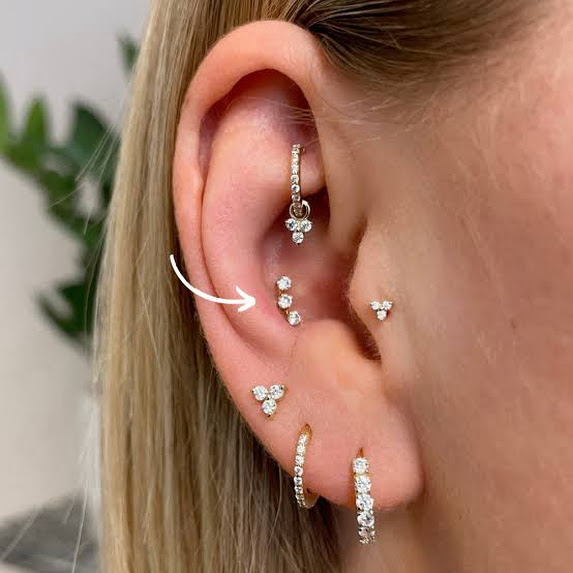
A helix piercing looks simple. One small stud sitting on the upper curve of your ear, catching the light. What most people don’t realise until they’re a few months in is that this tiny piercing is one of the fussiest ones you can get. It goes through cartilage, not soft lobe tissue, and cartilage plays by different rules.
At Vulture Tattoos in Sector 47, Gurgaon, we do a lot of these. Single helix, double helix, forward helix, flat, the works. And we have the same honest conversation with almost everyone who walks in: yes it’s worth it, yes it heals slower than you think, and no, we will never touch your cartilage with a piercing gun. This guide walks you through everything before you book, so you know exactly what you’re signing up for.
If you’re weighing up a helix piercing in Gurgaon and want the real version rather than the Instagram version, keep reading.
What actually is a helix piercing?
Your helix is the outer rim of your ear, that curved band of cartilage running along the top edge. A helix piercing is any piercing placed along that rim. Because there’s so much real estate up there, “helix” is really a family of piercings rather than a single one.
Here’s how the main ones break down:
- Standard helix: The classic. A single piercing on the upper outer rim of the ear. This is the one most people picture and the one we get asked for most.
- Forward helix: Sits at the front of the ear, right where the rim meets the side of your head, just above the tragus. It faces forward instead of out. Very pretty, slightly more particular to place well.
- Double or triple helix: Two or three piercings stacked along the rim, either done together or added over time. Great for building a curated ear.
- Flat helix: Placed on the flat inner section of cartilage near the top of the ear, below the rim. It sits on that broad flat panel rather than the edge itself.
- Anti-helix: The inner ridge of cartilage that runs parallel to the outer rim. Less common, distinctive look.
The good news is that all of these use the same fundamentals: they’re cartilage piercings, they need a needle, and they need patience. Once you understand the healing behaviour of one, you understand it for all of them.
If you’re still deciding between a lobe and cartilage placement, our wider ear piercing in Gurgaon page covers the full menu of ear points and where they sit.
Needle, not gun — and why this matters more for cartilage than anything else
This is the part we care about most, so we’ll be blunt about it. A piercing gun should never go through cartilage. Not your helix, not your tragus, not your flat. If a place offers to “gun” your helix, walk out.
Here’s the reasoning, because you deserve to understand it rather than just take our word for it.
A piercing gun doesn’t cut a clean hole. It uses blunt force to shove a blunt-ended stud through your tissue. On a soft earlobe that’s already less than ideal, but the lobe forgives a lot. Cartilage does not forgive. It’s dense, and forcing a blunt object through it can crack and crush the tissue around the channel rather than making a clean opening. That crushing is what leads to the long, angry, bumpy healings you see people complaining about online.
A sterile needle works completely differently. It’s sharp and hollow, so it removes a tiny clean core of tissue and leaves a smooth, open channel for the jewellery to sit in. Less trauma, less swelling, a cleaner heal. Most people also find the needle less painful, which surprises them, because they assume a needle sounds scarier.
There’s a hygiene problem with guns too. Most guns are plastic and can’t be put through an autoclave, the machine that sterilises equipment with pressurised steam. That means the working parts can’t be properly sterilised between clients. For a piercing that stays an open wound for the better part of a year, that’s a risk not worth taking. The Association of Professional Piercers has long advised against guns for exactly these reasons.
At Vulture Tattoos every helix piercing in Gurgaon we do is done with a single-use, pre-sterilised needle that comes out of a sealed pouch we open in front of you. Once it’s used, it goes into a sharps bin. It never touches anyone else.
The setup: what a safe, sterile piercing looks like
You should be able to watch your piercer work and see safety at every step. If you can’t see it, ask. A good studio has nothing to hide.
Here’s what our setup looks like, and what yours should look like anywhere you go:
- Sealed single-use needle: Opened in front of you, used once, disposed of in a sharps container. No reused needles, ever.
- Fresh gloves and a clean field: New gloves, cleaned and prepped skin, everything laid out on a fresh surface for you.
- Implant-grade jewellery: Your first piece matters. We use implant-grade titanium (ASTM F-136) or similar body-safe materials. Cheap alloys can leach nickel and irritate a fresh cartilage wound, which is one of the sneaky causes of bumps.
- Internally threaded or threadless jewellery: This means the part that passes through your ear is smooth, with no exposed screw threads dragging through the fresh channel. It’s a small detail that makes a real difference to healing.
- Correct initial length: We fit slightly longer jewellery at first to leave room for swelling, then downsize later once things settle.
We’re appointment-only, which isn’t us being fussy. It means the space is calm, clean and set up specifically for you when you arrive, rather than rushed between walk-ins. If you want to see how we think about hygiene and standards across the board, our guide to the best piercing shop in Gurgaon lays out what to look for before you trust anyone with a needle.
Does a helix piercing hurt? The honest answer
Yes, a little. But probably less than you’re bracing for.
Most people rate the actual piercing at around a 4 or 5 out of 10. It’s a sharp, quick pinch followed by a warm, throbbing pulse that fades within a few minutes. Cartilage is denser than the lobe, so it does register more than a lobe piercing, but the helix is one of the friendlier cartilage spots. Forward helix and flat can feel a touch sharper because of the tissue thickness, but we’re still talking seconds.
The part that catches people off guard isn’t the piercing itself. It’s the days after. Cartilage tends to throb and feel tender for a good while, and it can stay a little sensitive for weeks, especially at night if you roll onto it. That’s normal. It’s not the needle you’ll remember, it’s learning to sleep on the other side.
A quick, honest note: if you’re anxious, tell us. We’ll talk you through each step, and a calm breath at the right moment does more for the experience than any numbing trick.
The long healing: why cartilage takes 3 to 9 months (or more)
This is the single most important thing to understand before you book, so we’ll say it plainly. A helix piercing is not a two-week job. Realistic full healing runs from around 3 to 9 months, and for some people it stretches closer to a year.
Why so long? It comes down to blood supply. Your earlobe is soft tissue packed with blood vessels, so it heals fast, often within six to eight weeks. Cartilage has very little direct blood flow. It relies on the tissue around it to deliver everything it needs to repair, and that’s a slow, patient process.
There’s a trap hidden in this. Cartilage heals from the outside in. The surface will look and feel healed long before the inside is done. People see a calm-looking piercing at the two month mark, decide it’s fine, swap the jewellery or stop their aftercare, and set the whole thing back to square one. The outside looking good is not the finish line.
So the rule is simple: treat it as healing for far longer than it looks like it needs. Keep up the aftercare, leave the original jewellery in, and don’t rush.
Aftercare that actually works
Cartilage rewards a light, consistent touch and punishes fussing. The single biggest mistake we see is people overdoing it, twisting, poking, cleaning ten times a day. Less is genuinely more. Here’s the routine we send everyone home with.
- Saline, twice a day: Use a sterile 0.9% saline solution. Spray or dab it on, let it sit for around thirty seconds to soften anything crusted, then gently pat dry with clean gauze or a paper towel. Twice a day is plenty.
- Hands off: Don’t touch it, don’t spin it, don’t turn the jewellery. The old advice about rotating studs is outdated and actively harmful. Your hands carry bacteria, and every twist re-irritates the channel.
- Sleep on the other side: Pressure is the enemy of cartilage. Sleep on the opposite ear. A travel pillow with a hole in the middle, or even a soft folded towel, lets your ear rest in the gap without getting squashed.
- Keep products off it: Shampoo, conditioner, hairspray, face serums, makeup. Rinse the area at the end of a shower so nothing sits on the piercing.
- Mind your phone and masks: Wipe your phone screen, and be careful with glasses arms, mask loops and headphones that press or catch on the fresh piercing.
- Be patient with swimming: Skip pools, hot tubs and the like in the early weeks. Standing water is a shortcut to infection while the channel is open.
Eat well, sleep enough, drink water. Cartilage heals with your whole body, so run-down bodies heal piercings slowly. It sounds obvious, but it’s true. For a deeper walkthrough of the whole process, our piercing aftercare in Gurgaon guide goes step by step.
Bumps and keloids: what they are and how to avoid them
The dreaded helix bump. Almost everyone worries about it, and the good news is most bumps are avoidable and treatable if you understand what you’re dealing with. Not every bump is a keloid, and that distinction matters a lot.
- Irritation bumps: By far the most common. Small, sometimes red, usually caused by trauma, snagging, sleeping on it, cheap jewellery or over-cleaning. The frustrating part is they’re a sign your piercing is being disturbed. The fix is usually to stop disturbing it: leave it alone, keep to gentle saline, and it often settles.
- Hypertrophic scars: A raised scar that forms along the piercing channel, often from ongoing irritation or an angle that puts pressure on the tissue. Correct jewellery fit and time usually help.
- Keloids: Genuinely rarer than people think. A keloid is a genetic overgrowth of scar tissue that spreads beyond the original wound. It’s largely down to your genetics, not your aftercare. If you or close family have a history of keloid scarring, tell your piercer before you book, because cartilage piercings carry more risk for keloid-prone skin.
The best ways to avoid a bump come down to boring fundamentals: needle not gun, implant-grade jewellery, correct placement and angle, gentle aftercare, and not sleeping on it. That’s why the initial setup matters so much. A clean start prevents most of the problems people spend months trying to fix later.
If a bump does show up, don’t panic and don’t start experimenting with home remedies from the internet. Come and see us, or message first. Half the time it’s a small fix, a jewellery change or an aftercare tweak, and it calms down.
When can I change the jewellery?
Wait longer than you want to. As a rule, don’t swap your original jewellery until the piercing is genuinely healed, which for cartilage means a minimum of around 3 to 4 months and often longer. Because it heals outside-in, changing too early can tear the still-forming inside of the channel and trigger exactly the bumps and irritation you’re trying to avoid.
When it is time, the safest first change is one we do for you, or one where we’ve fitted quality threadless or internally threaded jewellery that’s easy to handle without dragging on the tissue. If you’re not sure whether you’re ready, ask. There’s no prize for rushing, and a lot to lose.
One more thing worth planning for: swelling downsizing. Because we fit slightly longer jewellery at first to allow for swelling, coming back for a shorter bar once the swelling settles keeps the stud snug and stops it catching on things. It’s a small visit that makes a real difference to comfort and healing.
Why people across Gurgaon and Gurugram trust us with cartilage
Gurgaon has plenty of places that will put a hole in your ear. Fewer that will do it with a single-use needle, implant-grade jewellery and a piercer who actually explains the healing to you first. Cartilage is unforgiving, and the studio you pick genuinely changes how your piercing turns out.
We’re based at Shop F-04, Spaze Boulevard, Sector 47, Gurgaon, and we’ve built up 270+ five-star Google reviews from people across Gurugram who came in for everything from a first helix to a full curated ear. Appointment-only, calm space, everything opened in front of you. That’s the standard we hold ourselves to on every single piercing, because when it’s cartilage, corners cut early show up as problems months later.
Whether it’s a single helix, a forward helix, a stacked double, or you’re not sure yet and want to talk it through, come in and we’ll map it out on your ear before anything happens.
Ready to book? Call or WhatsApp us on +91 96676 14250, or message us on WhatsApp and we’ll sort out a time.
See our work and get in touch
The best way to get a feel for our piercing work is to see it. Head over to our Instagram @vulture_tattooz for fresh helix and cartilage placements, healed results and curated ears we’ve built with our clients. You can browse everything and read more on our site at vulturetattoos.com, or reach the studio directly through our contact page.
When you’re ready to book your helix piercing in Gurgaon, just call or WhatsApp +91 96676 14250 and drop us a message on WhatsApp. We’re appointment-only, so a quick message secures your slot and gives us time to set up a fresh, sterile station just for you.
Frequently Asked Questions
How long does a helix piercing take to heal?
Realistically 3 to 9 months, and sometimes up to a year. Cartilage has very little blood flow so it heals slowly, and it heals from the outside in, which means it looks done long before it actually is. Keep up your aftercare for the full stretch even when the surface looks calm.
Is a helix piercing done with a needle or a gun?
A needle, always, for cartilage. We never use a piercing gun on the helix or any cartilage. Guns use blunt force that can crack and crush cartilage, and most guns can’t be properly sterilised. A single-use sterile needle makes a clean channel with less trauma and a better heal.
How much does a helix piercing hurt?
Most people rate it around a 4 or 5 out of 10, a quick sharp pinch then a warm throb that fades in minutes. It’s more than a lobe piercing because cartilage is denser, but the helix is one of the more manageable cartilage spots. The tenderness in the days afterward tends to be more noticeable than the piercing itself.
When can I change my helix jewellery?
Not until it’s genuinely healed, which for cartilage means a minimum of around 3 to 4 months, often longer. Changing early can tear the still-forming inside of the channel and cause bumps. When you’re ready, let us handle the first change or fit you with easy threadless jewellery.
How do I stop a bump forming on my helix?
The fundamentals do most of the work: needle not gun, implant-grade jewellery, correct placement, gentle twice-daily saline, and never sleeping on it or twisting the jewellery. Most bumps are irritation bumps from trauma, not keloids, and they usually settle once you stop disturbing the piercing.
Can I sleep on my new helix piercing?
Try hard not to. Pressure is one of the main causes of irritation and bumps. Sleep on the opposite side and use a travel pillow with a hole in the middle, or a soft folded towel, so your ear rests in the gap without being squashed. This is often the hardest part of healing.
What’s the difference between a helix and a forward helix?
A standard helix sits on the upper outer rim of the ear and faces outward. A forward helix sits at the front of the ear where the rim meets your head, just above the tragus, and faces forward. Both are cartilage piercings with the same healing needs, they just sit in different spots.
Do you offer other cartilage piercings in Gurgaon?
Yes. Alongside helix and forward helix, we do flat, double and triple helix, tragus, conch, daith and more, all with single-use needles and implant-grade jewellery. If you want to build a curated ear over time, come in and we’ll plan the placements together. Message us on WhatsApp or call +91 96676 14250.