Tribal Tattoo Designs: Styles, Meaning, Warli Art & How They Age
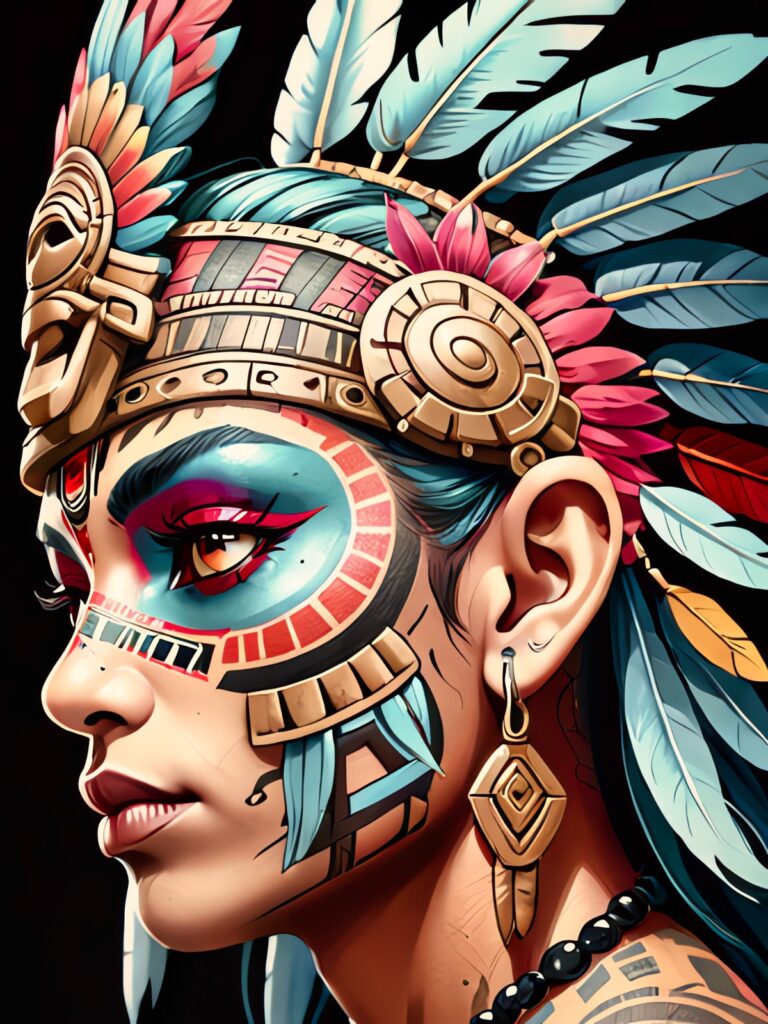
“Tribal” is the least accurate word in tattooing. It gets used for everything from a genuine Samoan pe’a to a black swirl someone picked off a flash sheet in 2004, and lumping those together does a disservice to both the traditions and to anyone trying to choose well.
The honest version is this: tribal covers several completely separate traditions, from different continents, with different rules and different meanings — plus one modern style that borrowed their look and dropped the meaning. Knowing which one you actually want is most of the decision. If you are exploring tribal tattoo designs, this guide covers the real traditions, the Indian one almost nobody mentions, and why this family ages better than anything else on skin. We are Vulture Tattoos, an appointment-only studio in Sector 47, Gurgaon.
The traditions worth knowing
- Polynesian. An umbrella covering Samoan, Tahitian, Hawaiian and Marquesan traditions. Dense geometric patterns built from repeating motifs — enata figures for people, shark teeth for strength and protection, ocean waves, spearheads. Every element and its position carries meaning, and a properly designed Polynesian piece reads like a sentence about the wearer.
- Maori (ta moko). From Aotearoa New Zealand. Distinctive spirals and curved koru patterns. Genuine ta moko encodes a person’s specific lineage and status, which is why non-Maori are generally offered kirituhi — the same visual language without the genealogical claim. A studio that does not know that distinction is a studio to be cautious of.
- Borneo / Dayak. Bold symmetrical rosettes, scorpions and floral forms. Traditionally marked journeys and achievements.
- Aztec and Mesoamerican. Stepped geometry, sun stones, serpents, warriors. Heavy black with strong architectural structure.
- Celtic. Endless interlaced knotwork, spirals, and the Celtic cross. The knots have no beginning or end, which is where the eternity reading comes from.
- Warli. India’s own tribal art tradition, from Maharashtra. Deceptively simple figures built from circles, triangles and lines — dancers in a spiral, farmers, animals, the tarpa dance. More on this below, because it is the most overlooked option here.
- Modern blackwork “neo-tribal”. The contemporary style — bold black shapes, negative space, flowing forms — that takes the visual language without claiming a specific tradition. Honest about what it is, and genuinely beautiful.
Warli — the Indian tribal art nobody offers
If you want tribal work with a genuine connection to your own country, Warli is the answer and it is remarkably under-used in tattooing.
Warli painting comes from the Warli people of Maharashtra and is one of India’s oldest surviving folk art traditions. The visual language is stripped to almost nothing: a circle for the head, two triangles for the body, straight lines for limbs. From that vocabulary it builds whole scenes — harvest, marriage, the tarpa dance spiralling outward, people and animals and fields all sharing one surface.
It works beautifully as a tattoo for reasons that are purely practical as well as cultural:
- It is already built from clean geometry — circles, triangles and lines, exactly the shapes that hold up best in skin.
- It uses generous negative space, which is what keeps a design readable as ink settles over decades.
- It scales. A single Warli figure works small; a full spiral dance works as a large back or thigh piece.
- It means something here. It is not borrowed from another continent, and it looks like nothing else on anyone else’s arm.
The appropriation question, answered straight
People ask this quietly, so here is a direct answer rather than a dodge.
Polynesian-inspired work is widely accepted when it is designed thoughtfully and the motifs mean something to you. It becomes a problem when specific sacred or rank-denoting elements are used decoratively by someone with no connection to them.
Maori ta moko is the clearest case. Genuine ta moko encodes whakapapa — a person’s actual lineage. Non-Maori wearing it is widely considered inappropriate. Kirituhi, using the same design language without the genealogical content, is the accepted route and is what any informed artist will offer you.
Modern blackwork sidesteps the question entirely, which is one of its virtues.
Our position is simple: we will tell you what your motifs mean and where the line generally sits, and then it is your call. What we will not do is pretend a design carries an ancestral meaning it does not, or copy a specific sacred pattern off an image search and hand it to you as authentic.
Why tribal ages better than any other style
Ask most artists which tattoos still look right after thirty years and the answer is bold blackwork — which is exactly what tribal is.
- Solid black is the most stable pigment. It resists UV better than colour and does not shift hue as it ages.
- Bold shapes have room to spare. As ink naturally spreads slightly over decades, a thick shape stays a thick shape. A hairline becomes a smudge.
- Negative space does the work. Tribal reads through the contrast between solid black and untouched skin, and that contrast survives.
- No fine detail to lose. There is nothing small enough to close up.
This is genuinely why the tribal band from twenty years ago still looks like a tribal band while a delicate script from five years ago has gone soft. If durability is high on your list, this family is the answer.
The honest downside
Everything that makes tribal durable makes it very hard to cover up. Solid black cannot be hidden under anything except more black, at larger size. A cover-up over a heavy tribal piece means going considerably bigger and darker, and often laser fading first.
That is not a reason to avoid it. It is a reason to be genuinely certain about the design before the outline goes down — which is why we spend real time at the drawing stage rather than tattooing something picked off a phone screen the same afternoon. If you are reworking older tribal work, our tattoo cover-up in Gurgaon page covers what is realistic.
The second honest note: flash-sheet tribal from the 2000s looks dated, and that is a design problem rather than a style problem. The generic barbed-wire-and-swirl look aged badly because it was mass-produced, not because black shapes are bad. Custom-designed tribal built around your body does not have that issue.
Where tribal sits best
Tribal is designed to wrap and follow the body, so it wants surfaces with shape.
- Upper arm and shoulder. The classic. The deltoid’s curve is what these patterns were made to flow around.
- Full and half sleeve. Where Polynesian work truly comes alive, because the pattern can move continuously around the arm. See our sleeve tattoo in Gurgaon guide.
- Chest and pectoral. Traditional in several of these cultures, and it suits symmetrical designs.
- Back and shoulder blade. A large flat canvas for an ambitious composition — our back tattoo guide covers planning at that scale.
- Armband. Extremely popular and very durable. Our armband tattoo designs guide covers how the join is planned.
- Calf and thigh. Roomy, comfortable to sit, and the leg’s shape suits flowing patterns.
Does it hurt?
The same as any tattoo in that spot — but with one difference worth planning for. Tribal means packing large areas of solid black, which is more passes over the same skin than outline work. That makes for longer, warmer sessions rather than sharper ones. Big pieces are usually split across sittings for exactly this reason.
Outer arm, shoulder, thigh and calf are comfortable. Inner arm, ribs, sternum and areas over bone are sharper.
Ready to talk through your idea? Call or WhatsApp us on +91 96676 14250 or message us on WhatsApp.
Healing and aftercare, with a Gurgaon twist
- Keep the initial wrap on for as long as your artist advises, then wash gently with lukewarm water and a mild fragrance-free soap.
- Pat dry, never rub. Solid black areas can lift pigment if rubbed while fresh.
- Apply a thin layer of the recommended balm. Large black areas tempt over-application. Thin is still the word.
- Do not pick or scratch. Solid black scabs heavily, and a picked scab leaves a pale patch in the middle of a black shape — the most obvious flaw there is.
- No swimming, saunas, gym sweat or soaking for the first two to three weeks.
- Keep it moisturised well past the peeling stage.
Solid black handles Gurgaon’s sun better than anything else, but not perfectly. UV still softens edges over the years, and on tribal that shows as the crisp boundary between black and skin going slightly fuzzy — which is exactly the contrast the whole design depends on. Use SPF 30 minimum, 50 is better, once healed. Our full tattoo aftercare guide for Gurgaon covers each stage.
Why the artist matters here
Tribal looks simple and is not. The difficulty is entirely in the flow: making a pattern wrap a three-dimensional limb so it looks correct from every angle, sits right when the muscle moves, and uses negative space deliberately rather than accidentally. Solid black is also technically demanding to pack evenly — patchy black is the most common sign of an inexperienced hand, and it does not improve with healing.
Ronny specialises in fine-line, botanical, script and geometric work, which covers blackwork, ornamental and Warli-style geometry. Ajay handles realism, devotional, portrait and cover-up work, including reworking older tribal pieces. Our page on the tattoo artists in Gurgaon introduces both.
Every tattoo is done with single-use sterile needles opened in front of you, in an appointment-only studio, which is part of why our clients have left more than 270 five-star Google reviews.
Custom design, made for your body
- Consultation. You bring the direction and any references. We talk tradition, motifs, meaning and how far the piece should eventually run.
- Design. Drawn to your actual body so the pattern flows with the muscle rather than sitting flat on it. You see it before any needle touches you.
- Stencil check in motion. Limb relaxed and flexed, because tribal has to look right when you move.
- A written quote at consultation. Clear, before anything begins. Our tattoo cost guide for Gurgaon explains what shapes it.
- Aftercare and touch-ups. A clear plan, and we are on WhatsApp while it heals.
The local angle: why book in Sector 47
Vulture Tattoos sits at Shop F-04, Spaze Boulevard, Malibu Towne, Sector 47, Gurugram, easy to reach from across Gurgaon, DLF, Sohna Road, Golf Course Road and South Delhi. Appointment-only means long black-packing sessions happen in a calm studio rather than around walk-in traffic, and that your design gets real drawing time.
Book your tribal piece: call or WhatsApp +91 96676 14250 to start with a consultation.
See our work and get in touch
Even black packing and clean flow are the two things to judge, and both need to be seen, so browse our recent pieces on Instagram at @vulture_tattooz, read more about the studio at Vulture Tattoos, or reach out through our contact page. When you are ready, call or WhatsApp us on +91 96676 14250 and we will plan tribal tattoo designs built around your body and built to last.
Frequently Asked Questions
What is the difference between Polynesian and Maori tattoos?
Polynesian is an umbrella covering Samoan, Tahitian, Hawaiian and Marquesan traditions, built from repeating geometric motifs like enata figures, shark teeth and waves. Maori ta moko is a distinct tradition from New Zealand, defined by spirals and curved koru patterns, and it encodes a person’s actual lineage. Non-Maori are generally offered kirituhi — the same visual language without the genealogical claim.
Is it disrespectful to get a tribal tattoo?
Polynesian-inspired work designed thoughtfully is widely accepted. The problems arise with specific sacred or rank-denoting elements used decoratively, and with genuine Maori ta moko worn by someone outside that lineage. Modern blackwork avoids the question altogether. We will tell you what your motifs mean and where the line generally sits, then it is your decision.
What is a Warli tattoo?
Warli is a folk art tradition from Maharashtra, built from circles, triangles and straight lines that combine into scenes of dance, harvest and daily life. It makes an excellent tattoo because it is already clean geometry with generous negative space — exactly what survives in skin — and because it is a genuinely Indian tribal tradition rather than one borrowed from another continent.
Do tribal tattoos age well?
Better than any other style. Solid black is the most stable pigment, bold shapes have room to spare as ink spreads over decades, and the design reads through contrast between black and bare skin rather than through fine detail. This is why twenty-year-old tribal work still looks like tribal work.
Can a tribal tattoo be covered up?
Only with difficulty. Solid black can only be hidden under more black at larger size, so a cover-up means going considerably bigger and darker, often with laser fading first. This is the trade-off for the durability, and it is why we spend real time on the design before starting rather than tattooing something chosen the same afternoon.
Does tribal work hurt more?
Not sharper, but longer. Packing large areas of solid black means many more passes over the same skin than outline work, so sessions run long and the sensation is a persistent warmth rather than a sting. Big pieces are usually split across sittings. Outer arm, shoulder, thigh and calf are the most comfortable placements.
Will my tribal tattoo look dated?
Generic flash-sheet tribal from the 2000s looks dated because it was mass-produced and identical on thousands of people, not because black shapes age badly. Custom work designed around your own body and your own motifs does not have that problem. The style itself is thousands of years old and has outlasted every trend so far.
How do I book and how much will it cost?
Booking is by appointment. Call or WhatsApp us on +91 96676 14250 to arrange a consultation, where we discuss the tradition, motifs, placement and scale, and give you a clear written quote once the design is settled. Pricing depends on size, detail and time, so we quote in person rather than online.