Mandala Tattoo in Gurgaon: Meaning, Designs, Placement & Aftercare
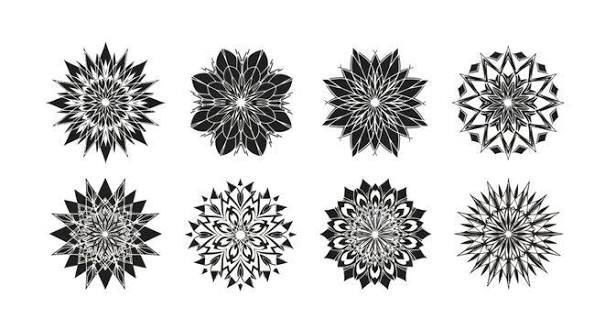
A mandala is one of those designs that looks calm from a distance and reveals its complexity the closer you get. Circles inside circles, petals radiating out from a single centre point, dots stacked so tightly they read as shading — it is quiet, symmetrical and, when it is done well, genuinely hypnotic. It is also one of the least forgiving styles to tattoo, which is exactly why choosing the right studio matters more here than with almost any other design.
This guide is written for anyone seriously considering a mandala tattoo in gurgaon. We will go through what the symbol actually means, the design variations worth knowing about, where mandalas sit best on the body, why symmetry is a genuine test of an artist’s skill, how these tattoos age over the years, what the pain is realistically like by placement, and how to look after it once it is healed. No hype, no sales pressure — just the information you would want before committing to something permanent.
At Vulture Tattoos in Sector 47, Gurugram, mandalas and geometric work are a core part of what we do. Ronny, one of our two resident artists, specialises in fine-line, script and geometric precision — the exact skill set a clean mandala demands. If you already know you want one, you can skip straight to the booking details, but the sections below will help you brief your artist properly and avoid the common mistakes.
What a mandala actually means
The word “mandala” comes from Sanskrit and translates roughly to “circle.” Far more than a decorative pattern, it has deep roots in Hindu, Buddhist and Tibetan traditions, where it is used as a spiritual and ritual symbol representing the universe, wholeness and the relationship between the self and the cosmos. Monks spend days creating intricate sand mandalas, then deliberately destroy them — a meditation on impermanence.
For most people getting inked today, the mandala carries a handful of overlapping meanings. It is worth knowing which ones resonate with you, because that intention often shapes the final design.
- Balance and harmony: the radial symmetry of a mandala represents equilibrium — opposing forces held in balance around a stable centre. Many people choose it during or after a period of change as a reminder to stay grounded.
- Wholeness and completeness: the unbroken circle has no beginning and no end, symbolising unity and the idea that everything is connected.
- Spiritual journey: reading a mandala from the outer edge inward mirrors the journey toward the self, toward stillness, toward a centre point of focus.
- The cycle of life: the repeating, expanding patterns echo cycles of growth, transformation and renewal.
- Meditative focus: even setting the symbolism aside, the act of tracing a mandala’s geometry has long been used as a focusing, meditative practice.
You do not have to be spiritual to want one. Plenty of clients simply love the geometry, the symmetry and the way the design flows with the body. That is a perfectly valid reason. But if the meaning does matter to you, tell your artist — it can influence the centre motif, the number of layers, and whether floral or purely geometric elements dominate.
Mandala design variations worth knowing
“Mandala” is a family of styles rather than a single look. Understanding the variations helps you brief your artist and gives you a vocabulary for what you actually want.
- Full (traditional) mandala: the classic complete circle, symmetrical in every direction, built from concentric rings of repeating motifs. Works beautifully on flat, roughly circular areas of the body.
- Half mandala: the design is cut at the centre line, radiating outward in a semicircle. This is ideal along the collarbone, down the sternum, or bordering a limb, and it pairs well with negative space.
- Dotwork mandala: instead of solid lines and fills, the shading and gradients are built entirely from thousands of individual dots (a technique called stippling). Dotwork gives a soft, almost textured finish and is one of the most striking ways to do a mandala — but it is slow, meticulous work.
- Geometric mandala: sharp lines, precise angles, sacred-geometry shapes and mathematical repetition. This is where clean execution matters most, and it overlaps heavily with our geometric tattoo work in Gurgaon.
- Floral mandala: softer, organic forms — petals, leaves and vines — arranged in a radial mandala structure. A popular choice for those who want the balance of a mandala with a gentler, more natural feel.
- Lotus mandala: the lotus sits at the heart of the design, adding its own symbolism of purity, rebirth and rising above difficulty. One of the most requested combinations, and a natural fit with the mandala’s spiritual roots.
- Ornamental and jewellery-style mandala: mandalas that mimic lace, mehndi or metalwork, sometimes with fine pendant-like elements draping across the skin. Especially effective on the chest, back of the hand or shoulder.
You can also combine a mandala with other elements — a moon phase, an animal, a mantra in fine script, or a compass. The mandala’s radial structure is generous that way. What matters is that the whole composition is planned together, not stitched on later, so the symmetry and flow hold up.
Why symmetry makes a mandala hard to tattoo
Here is the honest part that a lot of studios skip over. A mandala is essentially a symmetry test drawn on skin. The human eye is remarkably good at spotting when something that should be even is not — a petal slightly larger on one side, a ring that drifts off-centre, dot spacing that tightens in one quadrant and loosens in another. On paper you can erase and redraw. On skin, every line is permanent the moment the needle touches it.
Several things make it genuinely difficult:
- The body is not flat. Skin curves over muscle and bone. A mandala that looks perfect on a stencil can distort over a shoulder or forearm unless the artist understands how to place and adjust it for the anatomy.
- Line weight has to stay consistent. In geometric and dotwork mandalas, the thickness of every line and the density of every dot has to match across the whole piece. Any wobble is obvious.
- There is no hiding a mistake. In a realism or watercolour piece, small imperfections can blend in. In a mandala, symmetry is the whole point, so any error stands out immediately.
- It is slow, patient work. Rushing a mandala is how you get uneven spacing. A good artist works methodically and will tell you honestly if your design needs more than one session.
This is why placement and artist choice matter so much for this particular style. Ronny’s background in fine-line and geometric work is exactly what a mandala calls for — steady, precise, patient linework with an eye for balance. If you want to understand how we think about matching the right artist to the right style, our guide to the best tattoo artist in Gurgaon walks through it. The short version: for a mandala, ask to see healed, symmetrical geometric work before you commit. Fresh photos flatter everyone; healed photos tell the truth.
If you are considering a mandala tattoo in gurgaon and want to talk through your idea before booking, message us on WhatsApp or call — no obligation. Reach us at +91 96676 14250 or on WhatsApp and we will help you figure out what will actually work on your body.
Best placements for a mandala tattoo
Mandalas need a reasonably flat, open canvas to hold their symmetry, so placement is not just about looks — it affects how well the geometry survives. Here are the placements we recommend most often, with the trade-offs for each.
- Forearm: one of the most popular and practical choices. The inner or outer forearm offers a long, relatively even surface, is easy to show off or cover, and heals cleanly. A half or full mandala both work well here.
- Shoulder and upper arm: the rounded deltoid suits a circular mandala beautifully, and the design can flow onto the cap of the shoulder. Skin here is thicker, which helps with comfort and aging.
- Back (upper or between the shoulder blades): the largest flat canvas on the body and ideal for big, detailed mandalas where every ring has room to breathe. A spine-centred mandala is a classic.
- Thigh: plenty of space, easy to keep covered while it heals, and generally more comfortable than bony areas. A favourite for larger floral or lotus mandalas.
- Hand and back of the hand: striking and ornamental, but the most demanding placement. Hand skin is thin, moves constantly and does not hold fine detail as well over time, so expect faster fading and possible touch-ups. Worth it for the right design, but go in informed.
- Sternum and chest: a half or full mandala centred on the chest can be stunning and symmetrical, though it is a more sensitive area to sit through.
A quick word on size. Mandalas reward space. Shrink one too small and the fine lines and dots sit too close together — over the years they can blur into each other and lose definition. If you love a lot of detail, be prepared to give it a canvas large enough to age gracefully. Your artist should be honest with you about the smallest size a given design can be tattooed at without compromising it.
How a mandala tattoo ages
Every tattoo changes over time as your skin does. Fine, densely packed linework — which is exactly what mandalas are made of — is more susceptible to softening than bold, simple designs. This is not a reason to avoid the style; it is a reason to plan it properly.
- Give it room: as above, adequate size and sensible spacing are the single biggest factors in how well a mandala holds up. Lines that have space between them stay readable for decades.
- Placement matters: high-friction, high-stretch areas like hands, fingers and feet fade faster. Forearms, shoulders, backs and thighs age more gracefully.
- Sun is the enemy: UV exposure breaks down ink faster than anything else. Once healed, keep your mandala out of direct sun or under SPF — Gurgaon summers are brutal on tattoos.
- Touch-ups are normal: even a perfectly executed dotwork mandala may want a light touch-up years down the line, especially on hands. That is maintenance, not a flaw.
A well-placed, well-sized mandala from a careful artist will still read cleanly ten or fifteen years from now. A cramped, undersized one rushed into a bad spot will not. The difference is decided before the needle ever starts.
Pain by placement — an honest breakdown
Pain is personal, and no one can tell you exactly how it will feel for you. That said, some areas are reliably tougher than others, largely down to how thin the skin is and how close the bone and nerve endings sit to the surface. Because mandalas often involve long sessions of detailed linework and dotwork, endurance matters as much as peak intensity.
- More comfortable: outer forearm, outer thigh, shoulder and upper arm. More muscle, thicker skin, fewer surprises.
- Moderate: inner forearm, calf, upper back.
- More intense: hands and fingers, sternum and chest, ribs, and areas directly over bone. Thin skin and dense nerve endings make these sharper, and dotwork over these areas can feel prickly for long stretches.
The good news is that mandala sessions tend to be steady and rhythmic rather than aggressive, and most people settle into it after the first few minutes. If you are anxious about pain, tell your artist — pacing, breaks and starting on a friendlier placement all help. We have written a fuller, honest piece on this: does a tattoo hurt. It is worth a read if this is your first piece.
Custom mandala vs flash design
You broadly have two routes, and neither is wrong — it depends on what you want.
- Flash designs are pre-drawn mandalas the artist already has ready. They are quicker to book, and if a design speaks to you as-is, there is nothing wrong with choosing one. The trade-off is that it is not built for your body or your story.
- Custom mandalas are designed for you — sized and shaped for your chosen placement, built around a centre motif or meaning that matters to you, and adjusted to flow with your anatomy. For a style that lives and dies on symmetry and fit, custom work usually gives the better result.
At our studio we lean toward custom for mandalas, precisely because the placement and proportions make such a difference. That does not mean starting from a blank page every time — bring reference images you love, and your artist will use them as a springboard to design something that is genuinely yours rather than a copy of someone else’s tattoo.
Getting a mandala tattoo at Vulture Tattoos, Sector 47
Here is how the process works with us, so there are no surprises.
- Consultation: we are appointment-only, so you start with a conversation — in person or over WhatsApp. Bring your references, your placement idea and any meaning you want built in. We will talk through what will work on your body and what will not.
- Design and quote: your artist develops the mandala for your placement. Once the design and size are agreed, you get a clear written quote at the consultation, so you know exactly what you are committing to before anything is booked.
- The session: we open single-use, sterile needles in front of you, every time. For larger or dotwork-heavy mandalas we may plan more than one session rather than rush the symmetry.
- Aftercare: you leave with clear aftercare instructions and a way to reach us if you have any questions during healing.
Our two artists cover a wide range. Ajay works in realism, devotional, portrait and cover-up work, while Ronny handles fine-line, script and geometric — the natural home for mandala and dotwork pieces. We have earned over 270 five-star Google reviews from clients across Gurgaon and Delhi NCR, and we would rather talk you out of a design that will not age well than take a booking we do not believe in.
Ready to talk it through? Call or WhatsApp us at +91 96676 14250 — the fastest way to get a mandala tattoo in gurgaon planned properly is a quick chat about your idea, your placement and your timeline.
Aftercare for a mandala tattoo
Fine linework and dotwork heal like any tattoo, but because the detail is so precise, good aftercare directly protects the crispness of the design. Follow your artist’s specific instructions first — this is a general guide.
- Keep the first wrap on for as long as your artist advises, then wash gently with clean hands and a mild, fragrance-free soap.
- Pat dry, never rub. Apply a thin layer of the recommended aftercare product — thin is the operative word; smothering it slows healing.
- Do not pick or scratch. Mandalas can itch as they scab, but picking at a dotwork area can pull out ink and ruin the even shading.
- Stay out of pools, the sea and long soaks until fully healed. Showers are fine.
- Keep it out of the sun while healing, and use SPF on it for life once healed. This is the single biggest thing you can do to keep the lines sharp.
- Wear loose clothing over the area, especially for thigh, shoulder and back placements, so nothing rubs the fresh tattoo.
Healing usually takes a couple of weeks on the surface and longer underneath. If anything looks off — unusual redness, swelling or discomfort beyond the normal — message us. We would always rather you check than worry.
See our work and get in touch
The best way to judge a mandala artist is to look at healed, symmetrical work — so browse our portfolio on Instagram at @vulture_tattooz, where you can see our geometric and fine-line pieces up close. You can read more about the studio and our artists at vulturetattoos.com, or find our full location and hours on our contact page. When you are ready to plan your piece, call or WhatsApp us directly at +91 96676 14250 and we will take it from there.
Frequently Asked Questions
How long does a mandala tattoo take?
It depends entirely on size and detail. A small forearm mandala might be a single sitting of a few hours, while a large, detailed dotwork back piece can span several sessions. Dotwork in particular is slow, patient work — building shading from thousands of individual dots takes time, and rushing it is how symmetry goes wrong. Your artist will give you a realistic timeline at the consultation.
Do mandala tattoos hurt more than other styles?
Not inherently, but the long sessions and detailed dotwork mean endurance matters. The pain depends far more on placement than on the style itself — a forearm or thigh mandala is generally very manageable, while hands, ribs and sternum are sharper. We pace the session and take breaks so it stays comfortable.
Can a mandala be small, or does it have to be big?
It can be small, but there is a floor. Shrink a detailed mandala too far and the fine lines and dots sit too close together, which blurs over the years. If you want a small piece, we will simplify the design so it stays clean rather than cramming in detail that will not last. Your artist will tell you the smallest sensible size for your specific design.
Should I get a custom design or choose from flash?
Both are fine. Flash is quicker and can be lovely if a design speaks to you. But because mandalas depend so heavily on fitting your placement and proportions, custom work usually gives the better long-term result. Bring reference images you love and we will design something built for you.
How do I know an artist can do clean symmetry?
Ask to see healed geometric or mandala work, not just fresh photos. Fresh tattoos flatter everyone; healed ones show whether the lines stayed sharp and even. Look for consistent line weight, even dot spacing and rings that stay genuinely centred. Ronny’s fine-line and geometric portfolio is exactly the work to scrutinise this way.
Where does a mandala look best?
Forearms, shoulders, backs and thighs are the most reliable — flat, open canvases that hold symmetry and age well. Hands and sternum look striking but are more demanding and fade faster. The right placement depends on your design and how visible you want it, which we will talk through at your consultation.
How much does a mandala tattoo cost?
It varies with size, detail and placement, so we do not quote generic numbers. Once your design and size are agreed at the consultation, you get a clear written quote before anything is booked — no surprises, no pressure.
Is it safe and hygienic?
Yes. We are appointment-only and open single-use, sterile needles in front of you at every session. Hygiene is non-negotiable for us, which is part of how we have earned over 270 five-star reviews. If you have any concerns before booking, message us and ask — we are happy to walk you through our process.