Lobe Piercing in Gurgaon: Needle vs Gun and Why It Matters
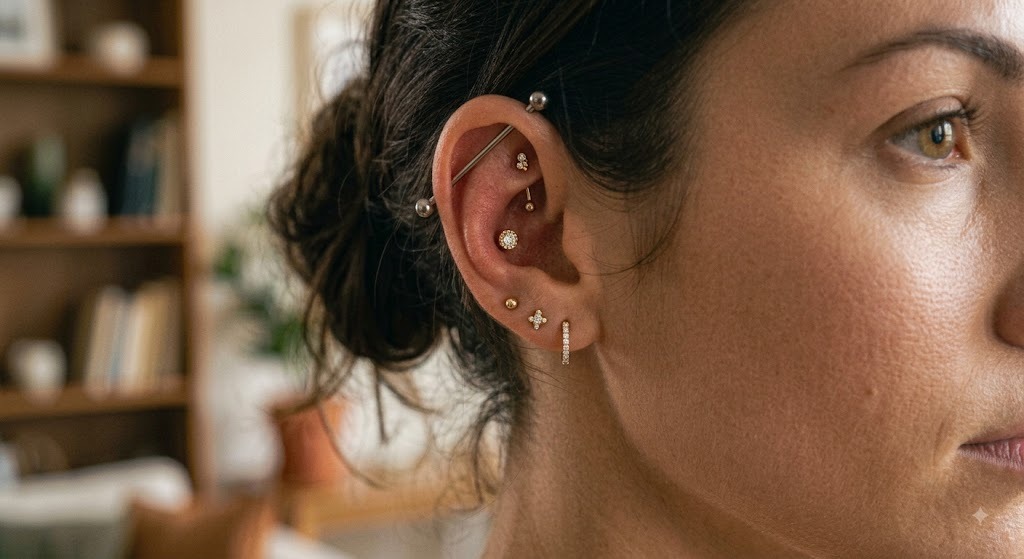
The lobe is the piercing everybody thinks they already know, which is exactly why so many are done badly. Most people’s first lobe piercing happened at a jewellery shop or a mall kiosk with a piercing gun, and most people have no idea that the method matters as much as it does.
If you are considering a lobe piercing in gurgaon — your first, another one, or fixing an old one — this guide covers why the tool used matters more than almost anything else, placement options, and the honest risks of stretching. We are Vulture Tattoos, an appointment-only studio in Sector 47.
Needle vs gun — this is not a small detail
This is the single most important thing on this page, and it applies to every piercing above the lobe as well, but the lobe is where the gun is most commonly used and least questioned.
A piercing gun forces a blunt stud through tissue using force. It does not make a clean hole — it tears one. That causes more tissue trauma than a needle, a longer and less predictable healing time, and a meaningfully higher risk of complications.
A needle is sharp and hollow. It creates a clean, precise channel with minimal trauma to the surrounding tissue. Healing is faster and more predictable, and the finished piercing sits straighter.
There is also a hygiene problem specific to guns. Most commercial piercing guns are made of plastic that cannot be autoclaved — properly sterilised with pressurised steam. Some parts get wiped down between customers. That is not the same as sterile, and it is the reason reputable piercing studios do not use them at all, for any placement.
The one place a gun should never be used, without exception, is cartilage — the gun’s force can cause micro-fractures in cartilage that a needle simply does not. If you take one thing from this page: for the lobe, insist on a needle; for anywhere above the lobe, insist on a needle and be suspicious of any studio that offers a gun.
Placement options on the lobe
- Standard single lobe. Centred, classic, suits any earring.
- Multiple lobe piercings. Two, three or a curated stack. Very popular, and best planned together rather than added one at a time without a plan — spacing matters for how the finished set looks.
- Upper lobe / transitional. Between the standard lobe and the cartilage above it. A nice middle ground for a stacked ear.
- Stretched lobe. A separate topic entirely — see the section below before you consider this.
If you are planning a curated ear with several piercings across lobe and cartilage, plan the whole layout at one consultation rather than adding pieces reactively over separate visits. It genuinely looks more intentional, and it is easier on your ear to space the healing sensibly.
Does it hurt?
The lobe is the most comfortable piercing on the ear, and one of the more comfortable piercings anywhere on the body. It is soft tissue with no cartilage and relatively few nerve endings compared with the rest of the ear.
Most people describe it as a quick, sharp pinch lasting a second, then it is done. This is genuinely a good first piercing if you have never had one, or a good way to reintroduce yourself to piercings if it has been a while.
Our pain guide compares placements across the whole body, and cartilage placements like our helix piercing guide explain why the lobe is so much easier.
Healing — the fastest on the ear
Six to eight weeks for a standard lobe piercing, which is dramatically faster than any cartilage placement because soft tissue has a much better blood supply.
- Weeks 1–2: some tenderness and mild swelling. Normal.
- Weeks 3–6: settling nicely, still be gentle with it.
- Week 6+: generally healed for most people, though everyone is slightly different.
Even so, do not rush the first jewellery change. Wait for the full period, and have it done at the studio the first time.
Aftercare, and the Gurgaon parts
- Sterile saline spray, twice a day. Spray, let it sit, pat dry with clean tissue.
- Do not twist or turn the earring. Outdated advice, and it disturbs healing tissue.
- No alcohol, hydrogen peroxide or Dettol. They damage healing cells.
- Keep hair products off it and rinse thoroughly after washing your hair.
- No pools or soaking until healed.
- Do not sleep on new studs awkwardly — mild care while you adjust to sleeping with them helps avoid catching them.
Local factors: Gurgaon dust and summer sweat matter for lobes too, though less than for cartilage — rinse gently after a dusty commute or a workout. Our piercing aftercare guide covers the full routine.
Stretching — read this before you start
Gauging or stretching a lobe piercing to fit a plug or tunnel is a real look that plenty of people want, and it deserves an honest word before you begin.
- Go slow. A quarter to half a size increase at a time, with weeks between steps. Rushing this is how lobes tear or blow out — a permanent thinning and distortion of the tissue that surgery cannot fully reverse.
- Use proper tapers, not force. Jamming a larger plug into an unstretched lobe damages tissue.
- It is not always reversible. Small stretches close up over time if you change your mind. Larger stretches, particularly beyond a certain size, often leave the lobe permanently altered even after removing the jewellery.
- Think about the long term before you go large — career considerations, and the fact that tastes change over a lifetime.
If you are interested in stretching, talk to us before you start rather than following an online guide alone. We will tell you honestly what a sensible pace looks like for your ears.
Fixing an old gun-pierced lobe
If your original piercing was done with a gun years ago and never healed cleanly, or has migrated, thinned or scarred, it is often fixable. Bring it in and we will look at what is actually going on — sometimes it is a simple re-piercing once the old channel is given time to close, sometimes the placement needs adjusting slightly.
Why the piercer matters
The lobe is the most forgiving piercing on the body, which is exactly why it gets treated carelessly. A rushed, unmarked lobe piercing can still end up crooked or uneven, particularly with multiples. A good piercer marks the spot, checks it with you in a mirror, and uses a needle every time — never a gun, for any age, for any placement.
- Needle, always. No exceptions, no guns.
- Single-use sterile needle opened in front of you.
- Marked and confirmed with you before piercing, especially for multiples.
- Implant-grade titanium studs for fresh piercings.
Every piercing here is done with single-use sterile equipment opened in front of you, in an appointment-only room. That is part of why our clients have left more than 270 five-star Google reviews. Our piercing studio guide for Gurgaon covers the standards to expect anywhere.
Ready to book, or want to plan a curated ear? Call or WhatsApp us on +91 96676 14250 or message us on WhatsApp.
Why book in Sector 47
Vulture Tattoos is at Shop F-04, Spaze Boulevard, Malibu Towne, Sector 47, Gurugram. Easy to reach from across Gurgaon, DLF, Sohna Road, Golf Course Road and South Delhi.
Book your lobe piercing: call or WhatsApp +91 96676 14250. See our work on Instagram at @vulture_tattooz, or reach us through our contact page.
Frequently Asked Questions
Why is needle piercing better than a gun for the lobe?
A gun forces a blunt stud through tissue using force, which tears rather than cuts — causing more trauma, slower healing and a higher complication rate. A needle is sharp and hollow, creating a clean precise channel with minimal trauma. Guns are also usually plastic and cannot be properly autoclaved between customers, which is a genuine hygiene concern.
Does a lobe piercing hurt?
Very little. The lobe is soft tissue with no cartilage and relatively few nerve endings, so most people feel a quick sharp pinch lasting a second. It is the most comfortable piercing on the ear and one of the more comfortable piercings anywhere on the body.
How long does a lobe piercing take to heal?
Six to eight weeks for most people, much faster than any cartilage piercing because soft tissue has a far better blood supply. Even so, wait the full period before changing the jewellery, and have the first change done at the studio.
How many lobe piercings can I get at once?
There is no fixed number, but plan a curated set at one consultation rather than adding piercings reactively over separate visits. Spacing matters for how the finished set looks, and it is easier on your ears to plan the healing sensibly than to layer new piercings on top of ones still settling.
Is stretching my lobes reversible?
Small stretches usually close up over time if you change your mind. Larger stretches, especially past a certain size, often leave the lobe permanently thinned and altered even after the jewellery is removed. Go slowly with proper tapers, never force a plug in, and think about the long term before going large.
Can you fix a lobe that was pierced with a gun and healed badly?
Often yes. Bring it in and we will look at what is actually happening — sometimes it is a straightforward re-piercing once the old channel has had time to close, sometimes the placement needs a small adjustment. We will tell you honestly what is realistic for your specific ear.
Can children get lobe piercings?
This is a normal, long-standing practice in India when done with a parent present and consenting, and it is different from cartilage or body piercings which carry more risk and a longer healing commitment. Ask us directly about our policy and process for this when you call.
How do I book?
Booking is by appointment. Call or WhatsApp +91 96676 14250. We discuss placement, whether it is a single lobe or a planned set, and give you a clear price before anything is done.