How Long Does a Tattoo Take? A Real Time Guide
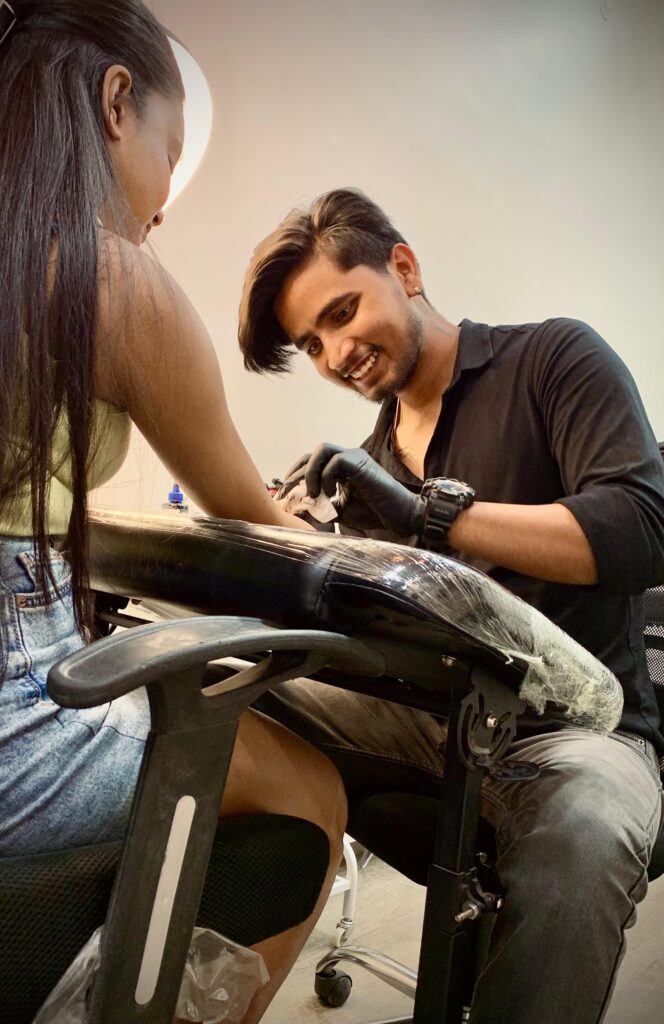
Ask ten people how long a tattoo takes and you will get ten different answers. Someone got a tiny star done on their lunch break. Someone else spent four Saturdays getting a sleeve finished. Both are telling the truth, because “a tattoo” covers everything from a two-minute line to a full back piece built over a year.
So the honest answer to how long does a tattoo take is: it depends, and the things it depends on are pretty predictable once you know them. This guide breaks it down in real time. No prices anywhere here, just minutes, hours and sessions, so you can walk into your appointment with a sensible idea of what your day looks like.
We are Vulture Tattoos in Sector 47, Gurgaon. We work appointment-only, one client at a time, and we do not rush a piece to clear the chair. That shapes how we talk about time, so consider this the same conversation we would have with you across the counter before a needle ever touches skin.
The short version: rough time ranges by size
If you want a headline number before we get into the detail, here is a working range. Treat these as ballpark for a clean, well-run session, not a promise. Your artist’s estimate for your specific design always beats a chart.
- Tiny and simple (a small symbol, a word, a fine-line sprig): often under an hour, sometimes 20 to 40 minutes of actual tattooing.
- Small with a bit of detail (palm-sized, some shading): roughly 1 to 3 hours.
- Medium (forearm-sized, a decent chunk of detail or colour): about 3 to 5 hours, sometimes in one sit, sometimes split.
- Large single piece (a big back-of-calf, a thigh panel, a chest plate): 5 to 8 hours and up, often across two or more sittings.
- Full sleeve or back piece: think in total hours, not one day. Many sleeves land somewhere around 15 to 40+ hours of work spread over several sessions.
Notice how quickly those numbers stack once you add size and detail. A palm-sized mandala with tight dotwork can genuinely take longer than a simple design twice its size. That is the part people miss when they only look at how big something is.
Why size is only half the story
Size gives you a starting point, then everything else pushes the number up or down. Here is what actually moves the clock.
Detail and density
A clean outline is fast. Filling that outline with fine texture, snake scales, feathers, tiny script, layered dotwork or heavy black is where hours disappear. Detailed areas can easily double the time you would guess from the size alone, because the artist is working slower and more carefully over every square centimetre. Two tattoos the same size can be an hour apart purely on how busy the design is.
Colour versus black and grey
Colour takes longer. Every time your artist changes colour, they usually change needles, wipe down, and re-load. Blends and gradients need passes on top of passes to sit smoothly. Black and grey moves quicker because it is one ink family, but heavy solid black over a large area is its own slow job. So a colourful piece and a black-and-grey piece of identical size are rarely the same length of sit.
Style
Style is one of the biggest hidden factors in how long does a tattoo take. A punchy old-school design with bold outlines and flat colour is relatively quick. Fine-line and script are precise but often lighter and faster on smaller pieces. Realism and portrait work are the slow lane on purpose, because the artist builds depth in careful layers and the illusion falls apart if it is rushed. At Vulture, Ajay handles realism, devotional and portrait work, and Ronny does fine-line, script and geometric, and those two styles run on completely different clocks even at the same size.
Placement on the body
Where it goes matters more than most first-timers expect. Flat, forgiving spots like the outer forearm or calf let the artist work in a steady rhythm. Fiddly, curved or bony areas such as ribs, hands, feet, the inner bicep, behind the ear or over the knee slow everything down. The skin moves, it needs stretching, and it is more sensitive, so you take more breaks too. Same design, tougher spot, longer day.
Your body on the day
You are part of the equation. Someone who is rested, fed and calm sits well and the work flows. Someone who skipped breakfast, slept badly and is running on nerves needs more breaks and starts fading. Pain tolerance is real and it varies wildly from person to person and even spot to spot on the same person. If your body needs to pause, a good artist pauses, and that is time well spent, not time wasted.
The parts of the appointment nobody counts
When people picture a tattoo, they picture the buzzing part. But a session has a front end and a back end that add up, and understanding them stops the day from feeling longer than you expected.
- Consultation: if you have not already talked the design through, that conversation comes first. Sometimes it is a separate visit days before, sometimes it is the first stretch of your appointment.
- Final drawing and tweaks: your artist may adjust the design, resize it, or redraw a section based on where it is actually going on your body. Small changes here save you from regret later.
- Stencil and placement: shaving the area, cleaning it, applying the stencil and getting the position exactly right can take a solid chunk of time on its own. On a big or curved piece this is not a two-minute job, and it is worth getting perfect because everything else is built on it.
- Breaks: water, a stretch, a snack, a breather. These are normal and healthy on any sit longer than an hour or two.
- Bandaging and aftercare talk: at the end your artist cleans up, wraps the piece and walks you through healing. Budget a few minutes for this, do not bolt for the door.
Add all of that up and a “one hour tattoo” can honestly be a ninety-minute to two-hour appointment once the setup and wrap-up are counted. That is not padding, it is the job done properly.
Why rushing a tattoo is a bad idea
There is a temptation, especially with a first tattoo, to want it over quickly. Resist it. A tattoo is permanent and the difference between good and great is often just time and patience.
Push an artist to hurry and a few things happen. Lines get less crisp. Shading gets patchy. The skin gets more beaten up because the artist is going harder to save time, which can mean worse healing and a piece that needs touching up. On realism or fine detail, rushing simply kills the result, because those styles are built on slow, controlled layers.
There is also a limit to how much your skin will take in one go. After several hours the tattooed area gets irritated and stops accepting ink cleanly. That is not weakness, it is biology, and it is exactly why big pieces get split into sessions. A good artist would rather book you back in than force a tired patch of skin to finish today. This is the whole reason we keep sessions unrushed and one client at a time, so nobody is working against the clock.
Multi-session pieces: thinking in sittings, not hours
Once a design gets past roughly five or six hours of work, splitting it into sessions is normal and usually smarter. Big sleeves, back pieces and large panels are almost always built over several sittings rather than one marathon.
There are good reasons for this beyond just skin fatigue. You stay comfortable and sit better in a fresh 3 to 5 hour block than you would deep into hour nine. The artist stays sharp and does their best work. And the earlier sections get to heal between visits, so by the time you come back that skin is settled and ready for any fine detail on top.
For a multi-session piece, the gap between sittings matters too. You generally want a section reasonably healed before the next long sit over it, so appointments are often spaced a couple of weeks or more apart. That means a large tattoo is a project measured in weeks or months on the calendar, even though the actual needle time might be a few full days added together. If you are planning a big arm project, our guide to a sleeve tattoo in Gurgaon goes deeper on how those come together.
Healing time is separate from tattoo time
This trips people up, so it is worth saying plainly. The hours in the chair and the time to heal are two completely different things.
The outer skin usually settles over roughly two to three weeks, when it scabs lightly, flakes and starts to look normal. The deeper layers keep healing underneath for a few months, which is why a fresh tattoo can look slightly cloudy or shiny for a while before it fully sharpens up. None of that healing overlaps with your appointment length. A one hour tattoo and a five hour tattoo both need real aftercare afterward.
So when you plan around a tattoo, plan for two windows: the appointment itself, and the healing stretch after. Do not book a beach holiday or a big gym push for the days right after a sit. Give the piece its space to settle and it rewards you with cleaner, longer-lasting colour.
How to prepare so your session runs smoothly (and faster)
You cannot change how detailed your design is, but you can absolutely stop yourself from being the reason a session drags. A well-prepared client is genuinely quicker to work on and has a better day. A few simple things help.
- Sleep the night before: a rested body handles the needle far better and sits still for longer.
- Eat a proper meal beforehand: a tattoo on an empty stomach is how people go lightheaded and how sessions get interrupted. Bring a snack and water for a long sit.
- Skip alcohol the night before and day of: it thins your blood, which means more bleeding, harder work for the artist and a longer session.
- Wear the right clothes: something loose that gives easy access to the spot being tattooed, and that you do not mind getting a little ink on.
- Come with your design settled: the big creative decisions should be made before the day. Endless changes in the chair eat into your time.
- Turn up on time and relaxed: arriving flustered and late shortens the working window and starts the day tense.
Do these and you shave real time off, plus you sit better, which means cleaner work. It is the easiest win available to you.
A realistic day for a first-timer
If this is your first piece, here is how the timing usually feels in practice. You arrive, there is a bit of chat and paperwork, then the design gets finalised and the stencil goes on. That front section can be twenty to forty minutes before any tattooing starts, and it is normal, so do not panic that “nothing is happening yet.”
Then the actual work begins. For a small to medium first tattoo you might be looking at one to three hours in the chair with a break or two, and it usually goes faster than the fear in your head suggests once the first few minutes pass. If you want to know what the sensation is actually like, we wrote an honest piece on whether a tattoo hurts, and for a full walkthrough of the whole experience there is our first tattoo in Gurgaon beginner’s guide.
The single best thing you can do is book a proper consultation first. Once your artist has seen the spot, understood the design and knows your style, they can give you a real time estimate for your tattoo instead of a chart’s guess. To get that conversation started, message or call us on +91 96676 14250 or reach us on WhatsApp.
See our work and get in touch
The best way to judge how a studio handles time is to look at finished, healed work, not promises. You can see plenty of ours on Instagram at @vulture_tattooz, and there is more on the website at vulturetattoos.com. We are at Shop F-04, Spaze Boulevard, Sector 47, Gurgaon, appointment-only, with single-use sterile needles and over 270 five-star Google reviews behind us.
When you are ready to talk through your idea and get a real time estimate, call or WhatsApp us on +91 96676 14250, or head to our contact page to book a slot. Tell us the design, the size and where it is going, and we will give you an honest picture of the day.
Frequently Asked Questions
How long does a small tattoo take?
A small, simple tattoo often takes under an hour of actual tattooing, sometimes just 20 to 40 minutes. Once you add the consultation, stencil and wrap-up, though, expect the whole appointment to run closer to an hour or a bit more. Add fine detail or shading and that same small piece can stretch to a couple of hours.
How long does a full sleeve take?
A sleeve is a project, not a single sit. Most sleeves add up to somewhere around 15 to 40 or more hours of work, spread across several sessions of a few hours each. On the calendar that usually spans weeks or months, because you want each section reasonably healed before the next long sit over it.
Can I get a big tattoo done in one session?
Usually not, and pushing to do so is rarely a good idea. After several hours the skin gets irritated and stops taking ink cleanly, so quality drops. Splitting a large piece into sessions keeps both you and the artist fresh and gives the earlier sections time to heal. The result is cleaner work that lasts.
Does a detailed tattoo take longer than a big one?
It absolutely can. Detail and density matter as much as size. A small, heavily detailed dotwork or realism piece can take longer than a larger design with simple lines and flat colour, because the artist is working slower over every millimetre. When you estimate time, look at how busy the design is, not just how big.
Why does colour take longer than black and grey?
Colour means more needle changes, more wipe-downs and more re-loading of ink, plus blends and gradients need repeated passes to sit smoothly. Black and grey moves quicker because it stays in one ink family. So a colour piece and a black-and-grey piece of the same size can be an hour or more apart in the chair.
Is healing time part of the tattoo time?
No, they are separate. The time in the chair is your appointment. Healing happens afterward, with the outer skin settling over roughly two to three weeks and the deeper layers continuing for a few months. Every tattoo, large or small, needs real aftercare once the session is done, so plan for both windows.
How can I make my tattoo session go faster?
Turn up rested, fed and sober, wear clothes that give easy access to the spot, and come with your design already decided so there are no long debates in the chair. A calm, prepared client sits better and gives the artist a clean run, which genuinely shortens the day and improves the result.
Should I book a consultation before my tattoo?
Yes, especially for anything medium or larger. A consultation lets your artist see the placement, understand the design and give you a real time estimate instead of a rough guess. It also settles the creative decisions ahead of time, so your actual session is smoother and quicker. Call or WhatsApp us on +91 96676 14250 to set one up.