Does a Tattoo Hurt? An Honest Pain Guide
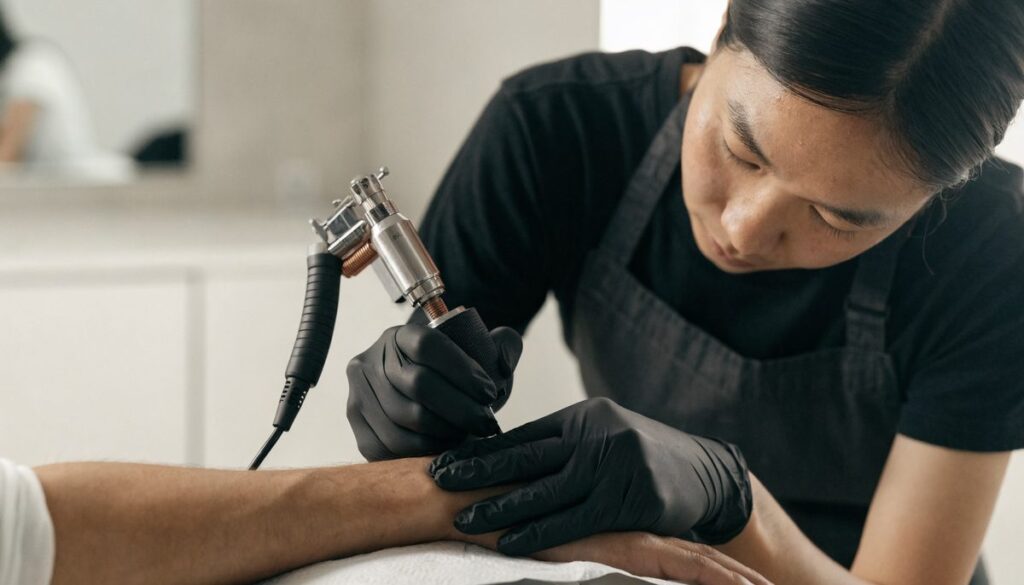
If you have been staring at a design for months and the only thing holding you back is one question — does a tattoo hurt? — you are in good company. It is the single most common thing first-timers ask us at Vulture Tattoos in Sector 47, Gurugram. The honest answer is yes, a little, but almost never as much as people imagine. Most clients walk out saying, “That was it?” In this guide our resident artists Ajay and Ronny break down exactly what to expect: how much pain by body area, what the sensation actually feels like, and the practical ways to make your session far more comfortable.
So, Does a Tattoo Hurt? The Short, Honest Answer
A tattoo is a series of tiny needle pricks depositing ink just under the surface of your skin, so there is sensation — but it is a steady, manageable kind of discomfort, not a sharp, shocking pain. Most people describe it as a hot scratch or the feeling of a cat scratch that keeps going over the same line. Your body also releases adrenaline and endorphins once the machine starts, which dulls the edge considerably. After the first ten or fifteen minutes, the majority of our clients settle in, relax, and even chat through the rest of the appointment.
Pain is personal. It depends on where on your body you sit, how big the design is, your sleep and hydration that day, and your own nervous system. The good news: with an experienced hand and a calm, sterile setup, the experience is very controllable — which is exactly why people travel across Malibu Towne and Spaze Boulevard to sit with artists they trust.
Tattoo Pain Chart: How Much Does a Tattoo Hurt by Body Area?
Where you place your tattoo matters more than almost anything else. Areas with more fat, muscle and cushioning hurt less; areas where skin sits thin over bone or where nerve endings cluster hurt more. Here is our honest, studio-tested pain map.
Low-Pain Areas (great for a first tattoo)
- Outer upper arm — the classic first spot; plenty of muscle, very forgiving.
- Forearm — easy to sit through, easy to show off later.
- Outer thigh — well-cushioned, ideal for larger pieces.
- Calf — muscular and comfortable for most people.
- Upper back and shoulder — broad, padded, and steady.
Medium-Pain Areas
- Inner forearm and inner bicep — softer, more sensitive skin.
- Lower back — manageable but more noticeable.
- Lower leg and shin edge — fine over muscle, sharper near the bone.
- Neck and behind the ear — sensitive but quick for smaller designs.
Higher-Pain Areas (very doable, just be prepared)
- Ribs — thin skin over bone, plus you feel every breath.
- Spine and sternum — bony with little cushioning.
- Feet, ankles and hands — lots of nerve endings close to the surface.
- Inner wrist, elbow ditch and back of the knee — tender, high-nerve zones.
- Collarbone — bony and exposed, but a stunning placement.
None of these are off-limits — people get gorgeous rib and collarbone pieces every week. It simply helps to know what you are signing up for so you can plan size and session length sensibly. If you are choosing your very first placement, our guide to getting your first tattoo walks through the friendliest spots in more detail.
What Does Getting a Tattoo Actually Feel Like?
People expect one constant feeling, but it changes with the stage of the work:
- Lining — a fine, sharp scratching sensation as the outline is drawn. Quick and precise.
- Shading — softer and more spread out, often described as a warm, buzzing rub. Many clients find this the most relaxing part.
- Colour packing — repeated passes over the same area, so it can feel warm or slightly raw toward the end.
- Bony areas — a more vibrating, rattly sensation rather than a cut.
The feeling also fades the longer you sit, because your body adapts. The toughest minutes are usually right at the start — once you are past them, it becomes background noise you can easily talk and breathe through.
How to Reduce Tattoo Pain: 9 Tips That Genuinely Work
You have real control over how comfortable your session is. Here is what we coach every client on before they sit in the chair at our Sector 47 studio.
- Sleep well the night before. A rested body tolerates discomfort far better than a tired one.
- Eat a proper meal beforehand. Never come on an empty stomach — low blood sugar is the number one cause of light-headedness.
- Hydrate. Well-hydrated skin takes ink more easily and feels less raw.
- Skip alcohol the night before. It thins your blood, increases bleeding, and makes the skin harder to work on.
- Avoid caffeine right before. It can make you jittery and more sensitive.
- Wear comfortable, loose clothing that gives easy access to the area being tattooed.
- Breathe slowly and steadily. Holding your breath tenses everything; calm breathing genuinely lowers the pain.
- Bring water and a small snack for longer sessions, and take short breaks when you need them.
- Ask about numbing cream. For sensitive areas we can advise on a suitable topical applied correctly beforehand — talk to us in advance so timing works with your design.
Starting smaller is also a smart strategy. A clean, compact design lets you experience the sensation without a long sit — explore our ideas for small tattoos if you want to ease in before committing to a full sleeve.
First-Timer Nerves? You Are Going to Be Fine
Almost every nervous client tells us afterwards that the build-up in their head was worse than the actual tattoo. The fear of the unknown is the hardest part — and that is exactly what an experienced studio removes. When you book at Vulture Tattoos, Ajay and Ronny talk you through the design, the placement and the timeline before any needle touches your skin, so there are no surprises.
It also helps to know you are in safe, clean hands. We work by appointment only, in a hospital-grade hygiene environment, with single-use needles that are sealed and opened in front of you. That is part of why we have earned 250+ five-star Google reviews from clients across Gurugram. If you have been searching for a trustworthy “tattoo studio near me,” that combination of skill, calm guidance and visible sterile practice is what you actually want — and it is what makes the pain question almost an afterthought once you are in the chair.
Ready to Book? Talk to Us First
The best way to settle your nerves is a quick chat about your idea, placement and pain expectations. Come and see us at Shop F-04, Spaze Boulevard, Malibu Towne, Sector 47, Gurugram, or reach out before you visit. You can contact the studio directly, call or WhatsApp +91 96676 14250, and our team will help you plan a comfortable, confident first session. When you are ready to see why we are considered the best tattoo shop in Gurgaon, book a consultation — no pressure, just honest advice. And once your piece is done, follow our tattoo aftercare guide so it heals beautifully.
FAQs — Does Getting a Tattoo Hurt? An Honest Guide
Does a tattoo hurt more than people say?
Usually less. Most first-timers expect something extreme and are surprised by how manageable it is — a steady hot-scratch feeling rather than sharp pain, and it eases the longer you sit as your body releases endorphins.
Where is the least painful place to get a tattoo?
The outer upper arm, forearm, outer thigh and calf are the most comfortable spots because they have more muscle and cushioning. These are ideal placements for a first tattoo.
Where does a tattoo hurt the most?
Bony, thin-skinned and nerve-dense areas hurt most — ribs, spine, sternum, feet, hands, ankles, inner wrist and the back of the knee. They are still very doable; it just helps to plan the size and session length.
Can I use numbing cream to reduce tattoo pain?
Yes, for sensitive areas a topical numbing cream can help if it is applied correctly and at the right time. Speak to Ajay or Ronny in advance so the timing fits your design and placement.
How should I prepare so my tattoo hurts less?
Sleep well, eat a full meal beforehand, stay hydrated, skip alcohol the night before, avoid excess caffeine, wear loose clothing, and breathe slowly during the session. Small habits make a real difference.
Is Vulture Tattoos in Sector 47 safe and hygienic?
Absolutely. We operate by appointment only with hospital-grade hygiene and single-use needles that are sealed and opened in front of you. Our 250+ five-star Google reviews reflect that standard.