3D Tattoo Designs: How the Illusion Works and What Actually Lasts
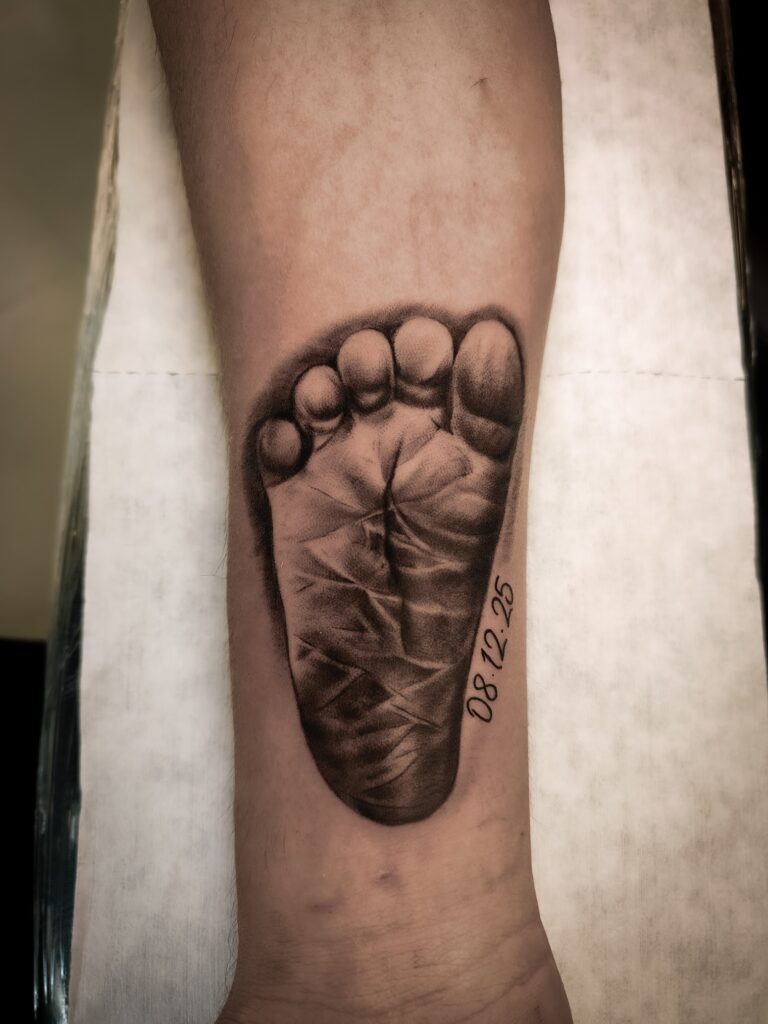
There is no such thing as 3D ink. There is no special machine, no separate technique, no layer that sits above the skin. A 3D tattoo is flat pigment in flat skin, exactly like every other tattoo.
What makes it appear to lift off the arm is one thing only: shadow. A dark shape placed where a real object would cast one, and a highlight of untouched skin where light would hit. Your brain does the rest — it has spent your whole life reading shadows as depth, and it does not stop just because the surface is skin.
Understanding that is genuinely useful, because it explains everything about which 3D pieces work and which disappoint. If you are exploring 3d tattoo designs, this guide covers how the illusion is built, its real limitations, and how to choose one that still fools the eye in fifteen years. We are Vulture Tattoos, an appointment-only studio in Sector 47, Gurgaon.
How the illusion is actually built
Three elements, and all three have to agree:
- A committed light source. The artist decides light is coming from, say, the upper left — and then every shadow in the piece falls to the lower right, consistently, without exception. One shadow going the wrong way collapses the whole effect instantly.
- A cast shadow on the skin. Not shading on the object itself, but a shadow the object throws onto the skin beside it. This is the single most important element and the one amateur work most often skips.
- Untouched skin as highlight. The brightest point of a 3D tattoo is bare skin. It cannot be added later; it has to be planned as negative space from the start.
That is the whole method. The skill is entirely in the shading discipline, which is why 3D work is really a subset of realism rather than a style of its own. Our realism tattoo guide covers how to judge that kind of work properly.
3D tattoo designs that work
- Objects sitting on the skin. A rose, a clock, a compass, a bird, a skull rendered with a cast shadow beneath it so it appears to rest on the arm. The most classic and most reliable version.
- Ripped or torn skin. The illusion of skin peeled back to reveal something beneath — machinery, muscle, a pattern. Dramatic, and it depends entirely on the shadow along the torn edge being correct.
- Biomechanical. Mechanical parts appearing to sit under the skin, following the actual muscle beneath. When it follows real anatomy, it is one of the most convincing effects in tattooing.
- 3D geometric and optical illusion. Impossible shapes, cubes, spheres, tessellations that appear to recede into the arm. Works beautifully because geometry has clean, predictable shadows.
- Lifted or floating elements. Butterflies, petals or geometric shapes appearing to hover a few millimetres above the skin, with a soft shadow below.
- 3D lettering. Text with dimensional depth and a cast shadow. Read our script tattoo guide first — lettering has its own ageing rules.
- Realistic portraits with dimensional shading. Not 3D in the trick sense, but the same shadow discipline used to make a face genuinely occupy space.
The honest limitations
Three things no studio page mentions, and all three are worth knowing before you book.
1. A 3D tattoo has one correct viewing angle. The illusion is built assuming the viewer is looking straight on. From a sharp angle, or in lighting that contradicts the built-in light source — direct sun from the wrong side, for example — the depth flattens out. It does not stop being a good tattoo, but the trick is strongest head-on, and that is worth knowing rather than discovering.
2. It depends on subtle greys, and subtle greys are what fade first. The illusion lives in the gradient between the darkest shadow and the untouched skin. Over years, UV and natural pigment settling soften exactly those mid-tones, and as the contrast range compresses the depth flattens. This is why some 3D pieces that were spectacular on day one look merely nice a decade later. The fix is real contrast at the outset — genuinely dark darks, genuinely clean highlights — not a full range of pleasant mid-greys. Our black and grey guide explains why contrast is everything in tonal work.
3. It needs a flat, stable surface. A shadow implies a flat plane for it to fall on. On a highly curved or constantly moving surface, the geometry of the illusion fights the anatomy underneath it.
Where 3D work sits best
- Inner and outer forearm. The best placement. Relatively flat, good size, easy to view head-on, and low friction.
- Upper arm and shoulder. Good surface, well protected from sun, comfortable to sit.
- Upper back and shoulder blade. A large flat canvas and almost no sun exposure — excellent for longevity.
- Thigh. Roomy, flat enough, comfortable, easy to keep covered.
- Chest. Works well for symmetrical or centred designs.
- Calf. Good for vertical compositions.
Placements to avoid for 3D specifically: hands, fingers, feet, wrists and anywhere with sharp curvature or constant flexing. Friction destroys the subtle greys fastest, and heavy curvature distorts the geometry the illusion depends on.
Size matters more than usual here
3D needs room, and for a specific reason: the illusion requires a full tonal range from solid black shadow through mid-greys to bare skin. Squeeze that range into a small area and the tones sit too close together to read as depth — you get a small grey blob rather than an object.
- Give it space. The cast shadow needs somewhere to fall, and that area of skin is part of the design, not empty margin around it.
- Do not crop the shadow. A 3D piece designed right up to the edge of the available space loses the very element that creates the effect.
- Push the darks. Contrast is what survives. A piece built on genuinely dark shadows still reads as dimensional decades later; one built on gentle mid-greys flattens as it ages.
Does it hurt?
The same as any tattoo of that size in that place — 3D is a shading approach, not a different sensation. What is specific is session length: dimensional shading means many passes over the same skin to build smooth gradients, so a 3D piece takes considerably longer than a line piece of the same size. The feeling is a dull persistent warmth rather than a sharp sting. Fleshier areas like the outer thigh, upper arm and calf are the most comfortable; ribs, sternum and areas over bone are sharper. Our tattoo pain chart breaks it down by placement.
Ready to talk through your idea? Call or WhatsApp us on +91 96676 14250 or message us on WhatsApp.
Healing and aftercare, with a Gurgaon twist
- Keep the initial wrap on for as long as your artist advises, then wash gently with lukewarm water and a mild fragrance-free soap.
- Pat dry, never rub. Rubbing a freshly shaded area lifts pigment out of exactly the mid-tones the illusion depends on.
- Apply a thin layer of the recommended balm. Thin is the word.
- Do not pick or scratch. A picked scab in a gradient leaves a light patch mid-shadow, which breaks the effect at the worst possible spot.
- No swimming, saunas, gym sweat or soaking for the first two to three weeks.
- Keep it moisturised well past the peeling stage.
The Gurgaon part matters more here than on most styles. Sun protection is the single biggest factor in whether a 3D tattoo stays dimensional. The illusion lives in a contrast range, and UV compresses that range — the shadows lighten, the mid-greys lift, and the depth flattens. Once healed, use SPF 30 minimum, 50 is better, every time it is exposed, and cover it on long outdoor days. Dry skin also dulls contrast even when the ink is fine, so daily moisturiser genuinely changes how dimensional the piece looks. Our full tattoo aftercare guide for Gurgaon covers each stage.
Why the artist matters more here than almost anywhere
3D is a discipline problem before it is a drawing problem. The artist has to choose a light source and then hold it consistently across every element in the piece, including elements added in a later session months afterwards. They have to plan negative space as highlight before the first line goes down, because you cannot add bare skin back later. And they have to lay smooth gradients without patchiness, because a blotchy gradient reads as a flaw rather than as depth.
An experienced artist will also tell you when a reference image will not translate — plenty of digital 3D artwork relies on lighting effects that skin simply cannot reproduce.
Ajay handles our realism, devotional, portrait and cover-up work, which is exactly where dimensional shading lives. Ronny specialises in fine-line, botanical, script and geometric work, which covers 3D geometric and optical-illusion pieces. Our page on the tattoo artists in Gurgaon introduces both.
Every tattoo is done with single-use sterile needles opened in front of you, in an appointment-only studio, which is part of why our clients have left more than 270 five-star Google reviews.
How it comes together with us
- Consultation. You bring the idea and references. We talk honestly about whether the effect will translate to skin, and at what size.
- Light source decision. We agree where the light is coming from before drawing, because everything else follows from it.
- Design. Drawn to your placement with the cast shadow and highlight planned as part of the composition. You see it before any needle touches you.
- A written quote at consultation. Clear, before anything begins. Our tattoo cost guide for Gurgaon explains what shapes it.
- Aftercare and touch-ups. A clear plan, and we are on WhatsApp while it heals.
The local angle: why book in Sector 47
Vulture Tattoos sits at Shop F-04, Spaze Boulevard, Malibu Towne, Sector 47, Gurugram, easy to reach from across Gurgaon, DLF, Sohna Road, Golf Course Road and South Delhi. For dimensional work, being local matters because contrast is the thing that occasionally wants refreshing years later — and having the artist who set the light source do that refresh keeps the illusion intact rather than guessed at.
Appointment-only also means long shading sessions happen in a calm, well-lit studio, which matters more than it sounds: you cannot judge subtle greys properly in bad light.
Book your 3D tattoo: call or WhatsApp +91 96676 14250 to start with a consultation.
See our work and get in touch
Gradient smoothness and shadow discipline are what to judge, and both need to be seen — ideally healed rather than fresh — so browse our recent pieces on Instagram at @vulture_tattooz, read more about the studio at Vulture Tattoos, or reach out through our contact page. When you are ready, call or WhatsApp us on +91 96676 14250 and we will plan 3d tattoo designs built to keep their depth.
Frequently Asked Questions
Is 3D tattoo ink different from normal ink?
No. There is no 3D ink, no special machine and no raised layer. A 3D tattoo is flat pigment in flat skin exactly like any other. The effect comes entirely from shadow placement — a dark shape where a real object would cast one, and untouched skin where light would hit. Your brain reads those cues as depth.
Do 3D tattoos last?
They last as long as any tattoo, but the illusion can weaken faster than the ink fades. The effect lives in the contrast between the darkest shadow and the bare skin highlight, and UV gradually compresses that range. A piece built on genuinely dark shadows still reads as dimensional decades later; one built on gentle mid-greys flattens. Sun protection matters more here than in almost any other style.
Does a 3D tattoo look real from every angle?
No, and this is worth knowing before you book. The illusion is built assuming a straight-on view and a specific light direction. From a sharp angle, or in lighting that contradicts the built-in light source, the depth flattens. It remains a good tattoo, but the trick is strongest head-on.
What size does a 3D tattoo need to be?
Larger than most people first ask for. The effect needs a full tonal range — solid black shadow, mid-greys, and bare skin — and squeezing that range into a small area leaves the tones too close together to read as depth. The cast shadow also needs room to fall, and that area of skin is part of the design rather than spare margin.
Where is the best placement for a 3D tattoo?
Relatively flat, stable, sun-protected surfaces: forearm, upper arm, upper back, thigh and chest. Avoid hands, fingers, feet, wrists and anywhere with sharp curvature or constant flexing — friction destroys the subtle greys fastest and heavy curvature distorts the geometry the illusion depends on.
Can any tattoo artist do 3D work?
No. It is a subset of realism and it demands shading discipline — holding one light source consistently across the whole piece, planning bare skin as highlight before starting, and laying smooth gradients without patchiness. An artist who has not done it will produce shading rather than depth. Always ask to see healed 3D work, not fresh photos.
Will a picture from the internet work as a 3D tattoo?
Sometimes, and often not. A great deal of digital 3D artwork relies on lighting and rendering effects that skin cannot reproduce, and reflections or glow simply do not translate. We will tell you honestly at the consultation whether your reference will work on skin, and what we would change to make it read properly.
How do I book and how much will it cost?
Booking is by appointment. Call or WhatsApp us on +91 96676 14250 to arrange a consultation, where we discuss the design, size, placement and light source, and give you a clear written quote once the details are settled. Pricing depends on size, detail and time, so we quote in person rather than online.