Tattoo Ideas for Men: Designs, Placement and Honest Advice
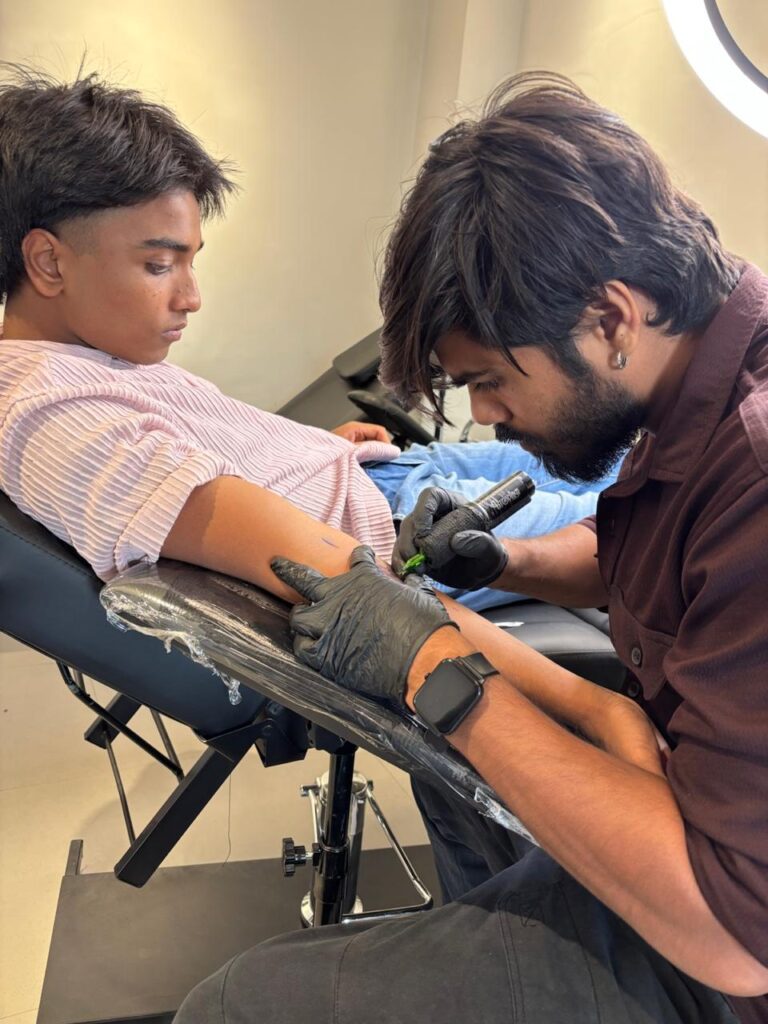
Most guys walk into a studio with a screenshot and a vague feeling. That is fine. But the difference between a tattoo you love in ten years and one you quietly regret usually comes down to a few decisions you make before the needle ever touches skin. This guide is built around those decisions.
I have inked a lot of first tattoos, and a lot of cover-ups for people who rushed the first one. So consider this the conversation I would have with you across the counter. We will run through solid tattoo ideas for men organised by theme, then by placement, then talk honestly about what ages well, what to hide for work, and how to pick an artist who won’t waste your skin.
How to think about a tattoo before you think about the design
The design matters less than most people assume. What matters more is size, contrast, placement, and the hand that draws it. A mediocre idea done well beats a brilliant idea done badly, every single time.
Start with a feeling, not a picture. Do you want something you glance at every day, or something private that lives under a shirt? Do you want people to ask about it, or do you want it to be yours alone? Answer that first and half the options fall away on their own.
Then think about permanence in the real sense. Skin stretches, fades, and softens. Fine detail blurs. Thin grey lines lighten. A design that survives twenty years is usually simpler and bolder than the reference you saved. Good artists design for the future version of your skin, not just today’s photo.
Tattoo ideas for men by theme
Themes are the easiest way to narrow the field. Pick the one that actually sounds like you, not the one that looks best on a stranger’s arm.
Devotional and spiritual
Devotional work is some of the most requested and most meaningful. Om symbols, Trishul, a Shiva portrait, Hanuman, Ganesha, folded hands, a cross, Arabic or Sanskrit script, a rosary wrapped around the forearm. These pieces carry weight because they mean something, which also means you want them done properly.
Portraits of deities live or die on shading and proportion. This is realism territory, so it needs an artist who genuinely does faces. Placement usually works best on the forearm, upper arm, chest, or back where there is enough room for the detail to breathe. At Vulture Tattoos, Ajay handles most of the devotional and portrait work for exactly this reason.
Script and quotes
Words age well when they are done with restraint. A single line in clean lettering, a date, a name, coordinates, a short phrase in a language that matters to you. The mistake men make here is going too small and too thin, then watching the letters merge into a smudge after a few years.
A few honest rules for script:
- Keep it short. A line or two reads forever. A full paragraph on the forearm becomes an unreadable block.
- Go a size up. Thin lettering closes up over time. A little breathing room between letters keeps it legible.
- Proofread twice. Spelling and grammar mistakes in a foreign language are the most common regret I see. Confirm the exact wording before the stencil goes on.
- Mind the flow. The inner forearm, the ribs, and the collarbone all carry text cleanly because the words can run in a straight line.
Ronny does most of the fine-line and script work in our studio, so lettering and geometric pieces tend to land on his table.
Realism and portraits
A portrait of a parent, a child, a pet, or a hero is one of the most personal tattoos you can get. It is also the hardest to pull off. Realism relies entirely on smooth gradients and correct proportion, and there is no hiding a bad one. If a portrait is a little off, it stops looking like the person, and that is worse than no tattoo at all.
If realism is what you want, look hard at healed work in an artist’s portfolio, not just fresh photos. Fresh tattoos always look sharp. Healed ones tell you whether the shading held. Give realism enough size, too. A face crammed into a small space loses the detail that makes it a face.
Geometric and blackwork
Geometric and blackwork have quietly become the most popular direction for men, and there is a practical reason. Solid black and bold linework age better than almost anything else. High contrast stays readable for decades while soft grey and colour slowly fade.
Think mandalas, sacred geometry, dotwork, linework patterns, blackout sleeves, and abstract shapes that wrap the arm. These sit beautifully on the forearm, upper arm, and chest, and they suit men who want something striking without a literal picture of anything. If you want a tattoo that still looks sharp when you are older, this is the safe and stylish bet.
Minimal and small
Not every tattoo needs to be a statement. A small symbol, a compass, a mountain outline, a single arrow, a tiny date behind the arm. Minimal work is a smart first tattoo because it is quick, less demanding to sit through, and easy to place somewhere discreet.
The one caution with minimal tattoos is the same as with script. Very fine, very small lines can spread and soften over time. Slightly bolder lines and a hair more size will keep a small piece crisp for far longer.
Nature and animals
Animals are among the most requested subjects for men because they say something without a caption. A lion or bear for strength, a wolf for loyalty, an owl or elephant for wisdom, a koi for transformation, an eagle for freedom. Nature scenes work the same way, so mountain ranges, forests, ocean waves, a compass over a landscape, botanical linework.
These themes scale from a small forearm piece all the way to a full sleeve, which is part of why they are so popular. A fine-line mountain range wrapping the bicep and a heavy blackwork lion on the outer forearm are both, at heart, nature tattoos, just at completely different volumes.
Tattoo ideas for men by placement
Where a tattoo goes changes everything, so this is one of the most useful sections here. Placement decides how much detail is possible, how much it hurts, how well it ages, and how easily you can cover it at work.
Forearm
The forearm is the most popular placement for a reason. It is visible when you want it and covered by a sleeve when you don’t, it takes detail well, and it ages nicely because it does not stretch much. It is also one of the easier spots to sit through, which makes it a strong first tattoo.
The inner forearm has softer, thinner skin that holds fine detail and stays out of direct sun, so colour and linework last longer there. The outer forearm gives you a flatter, firmer surface for bolder, larger pieces you actually want people to see. If you want a deeper breakdown, we wrote a full guide to forearm tattoos in Gurgaon.
Chest
The chest gives you a large, mostly flat canvas that stays hidden under any shirt, which makes it a favourite for personal or devotional pieces. It suits symmetrical designs, script across the collarbone, and large single subjects like a lion or an eagle with wings following the line of the chest.
Be ready for it, though. The centre of the chest and the area near the sternum are among the more sensitive spots to tattoo. Worth it for the payoff, but not the place I would pick for a first sitting.
Back
The back is the biggest canvas on the body, which is why it is where large-scale work belongs. A full back piece, a spine-following design, a scene that tells a whole story, all of it lives here. You get room for detail that would never fit elsewhere.
The trade-off is that you cannot see your own back easily, so it becomes a tattoo you get for the feeling of having it more than for looking at it. Large back pieces are also a commitment across multiple sessions, so go in expecting a project, not an afternoon.
Sleeve
A sleeve is not a single tattoo. It is a series of connected pieces built around a theme, and the best ones are planned as a whole from the start rather than stitched together from random ideas over time. That is the single biggest thing that separates a clean sleeve from a cluttered arm.
Designs that flow around the curve of the arm work best, so waves, smoke, clouds, geometric repeats, and negative-space borders all wrap naturally. If a full sleeve is on your mind, plan the overall map before the first session and read our guide to sleeve tattoos in Gurgaon so you know what you are signing up for.
Hand, neck, and other visible spots
Hands, fingers, and neck tattoos look great and carry real weight, but they come with two honest warnings. First, they fade and blur faster than almost anywhere else because the skin there takes a beating and regenerates quickly, so touch-ups are part of the deal. Second, they are the hardest to hide, which matters more than most people admit until they are sitting in a job interview.
I usually tell people to earn their way up to hand and neck work rather than start there. If your career is fine with visible ink, go for it. If you are not sure, keep the first few pieces somewhere a sleeve can cover.
Visible or hideable: the work question
This is the practical decision that trips up more men than any design choice. Ask yourself honestly what your workplace is like, and not just your job today but where you want to be in five years.
- Easy to hide: chest, back, upper arm, ribs, thigh. A shirt covers all of these, so they suit anyone in a formal or client-facing role.
- Hide with sleeves: forearm and lower leg. Visible in a t-shirt, gone under long sleeves or trousers. The best middle ground for most men.
- Hard to hide: hands, neck, face. Beautiful, permanent, and always on display. Only choose these if you are genuinely comfortable with them being seen every day.
There is no right answer here, only an honest one. Plenty of guys get visible work and never look back. Plenty of others are glad they kept the first one under a sleeve. Know which one you are.
What ages well, and what doesn’t
If you want a tattoo you will still like in twenty years, this section matters more than any design trend. Skin changes, and ink changes with it.
- Ages well: bold black linework, solid blackwork, high-contrast designs, and pieces with a little breathing room built in. These stay readable for decades.
- Ages harder: very fine grey lines, tiny lettering, delicate white ink, and heavily detailed work packed into a small space. It can look stunning fresh and blur over time.
- Depends on care: colour holds well with good aftercare and sun protection, and fades faster without it. Sunscreen on a healed tattoo is the cheapest longevity insurance there is.
None of this means you cannot get fine-line or colour work. It just means you go in with eyes open, size it sensibly, and accept that some styles need a touch-up down the line while others do not.
First tattoo? Start here
If this is your first, the goal is a good experience and a piece you are proud of, not the most ambitious design imaginable. Pick something medium-sized on the forearm or upper arm, a spot that is easy to sit through and ages well. Save the ribs, the full back, and the hands for later.
Keep the meaning simple and yours. A first tattoo does not need to sum up your entire life. Some of the best ones are quiet, small, and personal. You can always build outward from there once you know how your skin takes ink and how you handle the chair.
We put together a full beginner’s guide to your first tattoo in Gurgaon that walks through the whole process, from consultation to aftercare, if you want to know exactly what to expect before you book.
How to pick a good artist
This is the part people skip, and it is the part that decides how your tattoo actually turns out. The best tattoo ideas for men in the world will still look bad in the wrong hands. Spend your energy here.
- Match the artist to the style. Nobody is equally good at everything. If you want realism, find someone whose portfolio is full of realism. If you want fine-line script, find a fine-line specialist. A studio with more than one artist can point you to the right hand for your idea.
- Look at healed work. Fresh photos always look great. Ask to see healed tattoos, or scroll far enough back on their feed to find them. Healed work tells the real story.
- Check hygiene without apology. Single-use sterile needles, fresh gloves, wrapped equipment, a clean station. Any serious studio expects these questions and answers them happily.
- Read the reviews, plural. One glowing review means nothing. A long, consistent run of them means people keep coming back. We are proud of our 270-plus five-star Google reviews for exactly that reason.
- Notice how they consult. A good artist will push back on ideas that won’t age well, suggest a better size or placement, and treat your idea as a collaboration. If someone agrees to everything without a word, that is a flag, not a feature.
A quick word on trust and comfort. You are going to sit with this person for anywhere from an hour to a full day, and the result stays on you forever. If the vibe feels off in the consultation, listen to that. The right studio makes the whole thing feel calm and considered.
If you are in Gurgaon and weighing your options, come talk to us. Vulture Tattoos is in Sector 47, we work appointment-only with single-use sterile needles, and Ajay and Ronny cover the full range from devotional realism to fine-line geometric work. A consultation is the best way to turn a rough idea into a design that actually suits your skin. You can reach us on +91 96676 14250 or message us on WhatsApp to start the conversation.
A few ideas worth stealing
If you are still staring at a blank slate, here are combinations that consistently work for men and rarely disappoint:
- Bold forearm blackwork. A geometric or nature motif in solid black on the outer forearm. Ages beautifully, visible when you want, easy to cover.
- Inner-forearm script. A short meaningful line in clean lettering, sized with room to breathe. Private, readable, timeless.
- Chest devotional piece. A deity portrait or symbol across the chest, hidden under a shirt and deeply personal.
- Themed half or full sleeve. One idea, planned as a whole, built over a few sessions. The upgrade path once you are past your first piece.
- Minimal upper-arm symbol. A compass, mountain, or small animal outline. A calm, low-commitment first tattoo you can build around later.
See our work and get in touch
The easiest way to find your own direction is to look at real, healed work rather than stock photos. See what we have been making on Instagram at @vulture_tattooz, then head to Vulture Tattoos to explore our styles and guides. When you are ready to turn an idea into a plan, book a consultation and we will map it out with you. Call or WhatsApp us on +91 96676 14250, drop by Shop F-04, Spaze Boulevard, Sector 47, Gurgaon, or reach us through our contact page. You can also message us straight away on WhatsApp.
Frequently Asked Questions
What is a good first tattoo for a man?
Something medium-sized on the forearm or upper arm, in a bold style that ages well. Keep the meaning simple and personal rather than trying to sum up your whole life in one piece. These spots are easier to sit through and let you learn how your skin takes ink before you commit to anything larger.
Which tattoo placements age the best?
The forearm, upper arm, and chest hold up well because the skin there does not stretch much. In terms of style, bold black linework and solid blackwork stay readable for decades, while very fine grey lines and tiny lettering tend to soften over time. Sun protection on healed tattoos makes a real difference too.
Do tattoos hurt a lot?
It depends heavily on placement. Forearms and outer arms are among the more comfortable spots, while ribs, sternum, hands, and the area near bone are more sensitive. Most people find it far more manageable than they expected, and a good artist will pace the session so it stays bearable.
Where should I put a tattoo if I need to hide it for work?
The chest, back, upper arm, ribs, and thigh all stay hidden under normal clothing. The forearm and lower leg are a good middle ground since a sleeve or trousers cover them. Avoid hands, neck, and face if your job or future plans need ink out of sight.
How do I choose the right tattoo artist?
Match the artist to your style, look at their healed work rather than only fresh photos, confirm they use single-use sterile needles, and read through a solid run of reviews. Pay attention to the consultation too. A good artist will suggest improvements to size and placement instead of just agreeing to everything.
How long does a men’s tattoo take?
A small or minimal piece can be done in under an hour, a detailed forearm piece may take a few hours, and full sleeves or back pieces run across multiple sessions. Your artist can give you a realistic timeline once they have seen the design and the placement during your consultation.
Should my first tattoo mean something deep?
Not necessarily. Some of the best first tattoos are simple and quietly personal rather than heavy with meaning. What matters more is that you genuinely like the design and the way it looks on you. You can always add pieces with more significance later once you know your taste.
Can I get a custom design instead of picking from a flash sheet?
Yes, and custom work is usually the better route for something you will wear forever. Bring your references and ideas to a consultation, and the artist will draw something built for your body and your style. At Vulture Tattoos, Ajay and Ronny design custom pieces across realism, devotional, script, and geometric work.