Navel Piercing in Gurgaon: The Honest Guide to Pain, Healing and Safe Aftercare
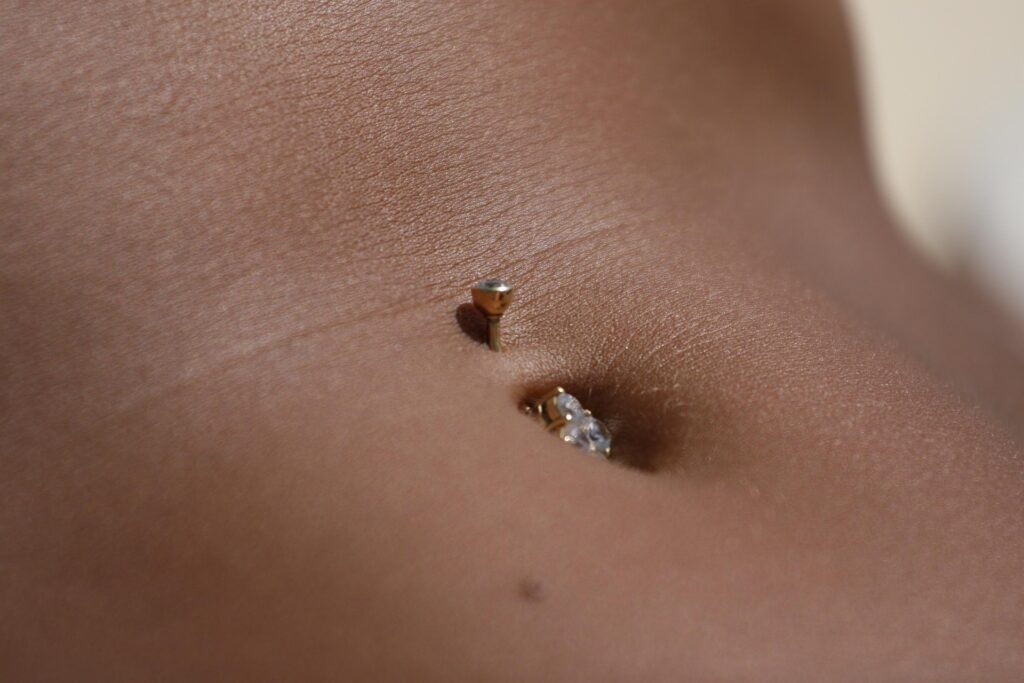
A navel piercing looks simple from the outside. A little curved barbell, a gem sitting neatly above the belly button, done in five minutes. What most people are not told is that this is one of the slowest-healing piercings on the body, one of the most dependent on your individual anatomy, and one of the easiest to get wrong when it is done with the wrong tool or the wrong jewellery. If you are researching a navel piercing in gurgaon, this guide is written to give you the full picture before you sit in anyone’s chair.
At Vulture Tattoos in Sector 47, Gurgaon, we pierce navels the slow, careful, boring way that actually works: a single-use sterile needle opened in front of you, implant-grade jewellery, and an honest conversation about whether your body is even suited to this piercing in the first place. This article covers everything the big blogs cover, and then the parts they skip.
Why a navel piercing is different from an earlobe
An earlobe is soft, still tissue with good blood flow. It heals in weeks. Your navel is the opposite. It sits on a part of the body that bends, folds, twists and stretches every single time you sit down, laugh, exercise or sleep. Every one of those movements tugs on the fresh piercing channel and interrupts healing.
On top of that, a navel piercing is a surface-adjacent piercing. The jewellery passes through a fold of skin at the upper rim of the navel, and your body is naturally inclined to treat that fold as something to push out rather than heal around. This is why navel piercings have a real, well-documented rejection and migration risk that earlobes almost never have.
None of this means you should not get it done. Plenty of navel piercings heal beautifully and last for years. It means the piercing rewards patience, good anatomy, good jewellery and good aftercare, and punishes shortcuts. Understanding that upfront is the single biggest thing that separates a happy navel piercing from a frustrating one.
Needle, never a gun
This is the part we refuse to compromise on. A navel should only ever be pierced with a sterile, single-use hollow needle. It should never be done with a piercing gun.
A piercing gun works by force. It blunt-punches the jewellery through tissue, crushing and tearing the skin around the channel instead of cleanly parting it. On thick, mobile navel tissue that trauma means more swelling, a rougher channel, slower healing and a higher chance of the body rejecting the piercing. Guns also cannot be fully sterilised, because they contain plastic parts that never see an autoclave, so there is a genuine cross-contamination risk from the previous customer.
A hollow needle is sharp, precise and single-use. It removes a clean core of tissue and lets the jewellery follow through smoothly with far less trauma. When you come to us for a navel piercing in gurgaon, you watch us open a brand-new sterile needle from its sealed pouch. It is used once, on you, and disposed of into a sharps bin in front of you. You can read more about our full process on our body piercing in Gurgaon page.
Anatomy matters more than you think: who is and isn’t a good candidate
Here is the honest truth most studios in a hurry will not tell you: not everyone has the anatomy for a standard navel piercing. Trying to force one onto unsuitable anatomy is the number one cause of migration, rejection and an ugly scar.
A classic navel piercing needs a defined upper navel ridge or lip. Specifically, we look for a well-formed fold of skin above the belly button with enough depth for the jewellery to sit securely without excessive tension. During your consultation we assess your navel standing up and sitting down, because the shape changes dramatically between the two positions.
Good candidates usually have:
- A clear, pronounced upper navel ridge with a defined overhang.
- Enough tissue depth so the barbell is not pushing tight against the surface.
- A navel shape that stays reasonably stable when you sit and bend.
People who may not be suited to a standard navel piercing:
- A shallow or “outie” navel with little or no upper ridge to anchor into.
- A navel that folds completely closed and pinches the jewellery when seated.
- Very tight skin with almost no lip above the belly button.
If your upper ridge is shallow, a floating navel piercing is sometimes an option. A floating navel uses a different curved bar so the decorative gem sits forward on flatter skin above the crease, with a smaller ball tucked inside. It can suit anatomy that a traditional deep navel cannot, but it is even more anatomy-dependent and needs the right bar length to avoid pressure and rejection. This is exactly the kind of judgement call that should be made by an experienced piercer looking at your actual body, not decided in advance from a photo online.
If we look at your navel and honestly believe it is not a good candidate, we will tell you. We would far rather turn down a piercing than sell you one that is likely to migrate out and scar. That standard is a big part of why people call us the best piercing shop in Gurgaon.
Implant-grade jewellery, opened in front of you
The metal that goes into your fresh navel matters enormously, because it is sitting inside an open wound for months. Cheap, unmarked “surgical steel”, nickel-heavy alloys or gold-plated fashion pieces are a leading cause of irritation, prolonged healing and allergic reactions during the delicate early weeks.
We start every fresh navel with implant-grade jewellery, meaning materials certified as safe to sit inside the human body:
- Implant-grade titanium (ASTM F-136): our default. Light, strong, nickel-safe for the vast majority of people and gentle on healing tissue.
- Solid gold (14k and above), where chosen: a genuinely body-safe option when it is solid, never plated.
- Correctly sized curved barbells: the length and gauge are matched to your anatomy and initial swelling, not just pulled from a tray.
Correct sizing is not a detail; it is half the job. A bar that is too short chokes the tissue and pushes the piercing to reject. A bar that is too long snags on clothing and rocks in the channel. We fit an initial bar with room for swelling, and change it down once you have healed.
How much does a navel piercing actually hurt?
Honest answer: less than most people fear. On the pain scale used across the piercing world, a navel is usually described as mild to moderate. There is a lot of soft tissue around the navel, and the actual needle pass is quick.
Most clients describe it as a sharp pinch and a firm pressure for a second or two, followed by a hot, throbbing feeling that settles within minutes. It is genuinely over fast. Because we use a clean single needle pass and a calm, unhurried technique, we are not dragging the sensation out.
For the first 24 to 72 hours it is normal for the area to feel tender, look a little pink, and throb dully if you knock it or bend sharply. That is your body sending blood to the site to begin healing, not a warning sign. The soreness fades steadily over the first week.
Ready to talk it through with a real piercer? Call or WhatsApp us on +91 96676 14250 or message on WhatsApp here to book a consultation.
The long healing time — and why it is genuinely 6 to 12 months
This is the single most important thing to accept before you get a navel done. A navel piercing takes six to twelve months to fully heal. Some take even longer. This is not us being cautious; it is simply how this piercing works.
There is an outside and an inside to healing, and they are not the same. Within a few weeks the piercing can look calm and settled on the surface. Underneath, the channel is still fragile, immature tissue that has not yet fully lined and toughened. If you treat a two-month-old navel as “healed” and start changing jewellery, swimming or being rough with it, you can set healing back to the start or trigger rejection.
Why so slow? Three reasons stack up:
- Constant movement: the navel bends and folds all day, tugging the channel and reopening micro-tears.
- Clothing pressure: waistbands, jeans and belts sit directly over the piercing.
- Low, folded location: it is a warm, covered area that traps sweat and friction, especially in the Gurgaon climate.
The mindset that makes navels heal well is simple: assume it is still healing until roughly the one-year mark, and treat it gently until it has proven otherwise. Patience here is not optional, it is the whole game.
Aftercare that actually works in the Indian climate
Aftercare for a navel is not complicated, but it is unforgiving of shortcuts, especially in Gurgaon’s heat, dust and humidity, which mean more sweat and more friction against the piercing than in a cooler climate. Here is the routine we give every client, and we go through it in full when you get pierced.
Cleaning
- Wash your hands thoroughly before you go anywhere near the piercing.
- Clean once or twice a day with sterile saline solution, no more. Over-cleaning irritates the wound.
- Let the saline soak the area, gently clear any crust, and pat dry with clean disposable tissue, never a shared cloth towel.
Do not use: Dettol, savlon, surgical spirit, hydrogen peroxide, antibiotic ointments or alcohol on a fresh navel. These harsh products dry out and damage the delicate healing tissue and slow everything down. Plain sterile saline is all it needs. Our full piercing aftercare guide for Gurgaon walks through this in more depth.
Clothing
- Wear loose, high-waisted or low-waisted clothing that keeps fabric off the piercing.
- Avoid tight jeans, tight waistbands and belts that sit directly on the navel and rub it all day.
- Choose breathable cotton over synthetic fabric that traps sweat, especially in summer.
Exercise, gym and swimming
- Light movement is fine, but avoid heavy core work, crunches and anything that repeatedly folds the navel in the early weeks.
- Sweat is an irritant. Rinse gently with saline after workouts and change out of damp gym clothes quickly.
- Avoid swimming pools, hot tubs, lakes and the sea for the first several months. Standing water is a real infection risk on an open piercing.
Daily habits
- Do not touch, twist or rotate the jewellery. The old advice to “turn it” is wrong and only damages the channel.
- Try not to sleep on your stomach, which presses and drags the piercing all night.
- Be careful with pets, seatbelts and towels that can catch the bar.
Signs of rejection and migration — and what to do
Because a navel is surface-adjacent, you should know what rejection and migration look like, so you can act early instead of losing the piercing.
Watch for these signs:
- The jewellery visibly moving closer to the surface of the skin over weeks.
- The amount of skin between the two holes getting thinner, so you can start to see the bar through it.
- The holes getting noticeably larger, or the entry and exit points looking stretched.
- Ongoing redness, flaking and irritation that never settles beyond the normal early period.
Migration means the piercing is slowly shifting from where it was placed. Rejection is the body pushing it all the way out. Caught early, we can sometimes save it by reassessing jewellery size and material, or by removing it before it scars badly and re-piercing later once healed. Left too late, the skin over the bar thins out and the piercing is lost, often with a visible scar.
Important: irritation is not the same as infection. Most angry-looking navels are irritated by pressure, bad jewellery or over-cleaning, not infected. A genuine infection, with spreading heat, significant swelling, severe pain and thick coloured discharge, needs a doctor, not just jewellery changes. If you are ever unsure, message us a photo on WhatsApp and we will help you read it.
Changing your jewellery — when and how
Do not change your own navel jewellery early. The first downsize, usually swapping the longer initial bar for a shorter, more comfortable one once swelling has fully gone, should be done by your piercer, typically several weeks to a couple of months in depending on how you have healed.
The first full jewellery change to something decorative should wait until the piercing is properly healed, which for a navel realistically means many months, not weeks. Changing early on a stiff, immature channel can tear it, reintroduce bacteria and trigger irritation or rejection. When you do change, stick to implant-grade materials and correct sizing. We are always happy to do jewellery changes and downsizes for you and to check the piercing while we do.
Why book your navel piercing at Vulture Tattoos in Gurgaon
If you are choosing where to get a navel piercing in gurgaon, here is what you get with us:
- Needle only, never a gun, for a cleaner channel and better healing.
- Single-use sterile needle opened in front of you and disposed of safely after.
- Implant-grade titanium and solid gold jewellery, correctly sized to your anatomy.
- An honest anatomy assessment, including telling you if you are not a good candidate.
- Appointment-only studio so you get unhurried, one-to-one attention.
- 270+ five-star Google reviews from people across Gurgaon.
- Clear aftercare guidance and free follow-up help by WhatsApp.
We are at Shop F-04, Spaze Boulevard, Malibu Towne, Sector 47, Gurugram, easy to reach from across the city. You will get a clear written quote at your consultation, with no pressure and no surprises. You can compare how we structure things on our piercing cost in Gurgaon page.
To book, call or WhatsApp +91 96676 14250, or reach us through our contact page. We will talk you through everything before you commit.
See our work and get in touch
The best way to judge a piercer is to look at their healed work and how they treat clients. See our piercings, studio and day-to-day on Instagram at @vulture_tattooz, read more on vulturetattoos.com, and when you are ready, call or WhatsApp us on +91 96676 14250 to book your navel piercing consultation.
Frequently Asked Questions
Does a navel piercing hurt a lot?
No, most people find it mild to moderate. There is plenty of soft tissue around the navel and the needle pass is quick, usually a sharp pinch and firm pressure for a second or two, then a fading throb. It is over fast, and using a single clean needle pass keeps it as brief and comfortable as possible.
How long does a navel piercing take to heal?
A navel piercing takes six to twelve months to fully heal, and sometimes longer. It can look settled on the surface within weeks while still being fragile underneath, so you should treat it gently and avoid changing jewellery or swimming until it is genuinely healed, not just calm-looking.
Can everyone get a navel piercing?
No. A standard navel piercing needs a defined upper navel ridge with enough depth to anchor the jewellery. Shallow navels, outies and navels that fold shut when you sit may not be suitable. In some of those cases a floating navel is an option. We assess your anatomy in person and will tell you honestly if it is not a good idea.
What is the difference between a floating navel and a regular navel piercing?
A regular navel uses a curved barbell where the gem hangs down inside the navel. A floating navel uses a different bar so the decorative gem sits forward on flatter skin above the crease, with a smaller ball tucked inside. Floating navels can suit shallower anatomy but are even more dependent on correct placement and bar length.
How do I know if my navel piercing is rejecting?
Watch for the jewellery moving toward the surface, the skin between the two holes getting thinner so you can see the bar through it, the holes stretching larger, or persistent redness and flaking that never settles. If you notice any of these, contact us early. Caught in time, adjusting jewellery can sometimes save it.
Can I go to the gym or swim with a new navel piercing?
Light exercise is usually fine, but avoid heavy core work, crunches and anything that repeatedly folds the navel in the early weeks, and rinse with saline after sweating. Avoid pools, hot tubs, lakes and the sea for the first several months, since standing water is a genuine infection risk on a fresh piercing.
What should I clean my navel piercing with?
Only sterile saline solution, once or twice a day, with clean hands. Do not use Dettol, savlon, surgical spirit, hydrogen peroxide, alcohol or antibiotic creams, because they dry out and damage the healing tissue and slow everything down. In Gurgaon’s heat, keep the area dry and friction-free between cleans.
How much does a navel piercing cost in Gurgaon?
Cost depends on the jewellery you choose and your anatomy, so we give you a clear written quote at your consultation with no pressure and no surprises. Book by calling or messaging us on +91 96676 14250 and we will talk you through your options before anything is decided.